Les meilleures plaques d'identification pour petits chiens : pourquoi la taille, le poids et la technologie intelligente comptent
Découvrez les meilleures plaques d'identification pour petits chiens, alliant légèreté et robustesse avec la technologie du code QR. Apprenez comment les plaques intelligentes imperméables de Pethna offrent à votre petit compagnon les meilleures chances de rentrer sain et sauf à la maison.
Introduction
Lorsque vous partagez votre foyer avec un petit chien – que ce soit un Chihuahua, un Spitz nain, un Yorkshire Terrier ou une petite race croisée – chaque accessoire doit être choisi avec soin. Un collier trop lourd peut fatiguer un cou fragile ; une plaque trop grande peut devenir gênante pendant les jeux. Mais l'accessoire le plus crucial reste la plaque d'identification. C'est le billet de retour de votre animal s'il s'échappe par la porte, file dans les buissons ou est effrayé par un bruit fort. C'est pourquoi trouver les meilleures plaques d'identification pour petits chiens ne relève pas seulement de l'esthétique – c'est une question de sécurité, de confort et de tranquillité d'esprit.
Dans ce guide complet, nous vous expliquerons tout ce que vous devez savoir pour choisir la plaque d'identité parfaite pour votre petit compagnon. Nous verrons pourquoi les petits chiens ont des besoins spécifiques, quelles caractéristiques privilégier et comment la technologie moderne du code QR révolutionne le retour des animaux perdus. Et nous vous montrerons pourquoi les plaques d'identification imperméables à code QR de Pethna sont le choix ultime pour les propriétaires qui veulent le meilleur pour leur membre de la famille à quatre pattes. Que vous soyez un nouveau propriétaire de petit chien ou un parent d'animal expérimenté, cet article vous aidera à prendre une décision éclairée qui pourrait un jour sauver la vie de votre chien.
Pourquoi les petits chiens ont besoin de plaques spécialisées
Les petits chiens ne sont pas simplement des versions réduites des grands chiens. Les chiens pesant moins de 7 kg présentent des différences anatomiques et comportementales qui exigent une approche différente de l'identification. Considérez d'abord la contrainte physique. Une plaque métallique standard pesant 10 grammes peut être négligeable pour un Labrador, mais pour un Chihuahua de 1,5 kg, cette même plaque peut provoquer une fatigue du cou, des irritations cutanées, voire affecter sa posture à long terme. Les meilleures plaques d'identification pour petits chiens doivent être ultra-légères, tout en restant suffisamment résistantes pour supporter l'usure quotidienne.
Deuxièmement, les petits chiens sont souvent plus enclins à s'échapper. Leur taille leur permet de se faufiler par les trous sous les clôtures, de filer par les portes ou de disparaître dans les hautes herbes. Selon l'American Kennel Club, les petites races font partie des plus grands artistes de l'évasion. Lorsqu'ils se perdent, leur petite taille les rend plus difficiles à repérer, et ils sont plus vulnérables aux prédateurs, à la circulation et aux intempéries. Une plaque facile à lire et immédiatement scannable peut faire la différence entre des retrouvailles rapides et une recherche déchirante.
Troisièmement, de nombreux petits chiens ont une peau sensible ou des allergies. Le nickel, le laiton et d'autres métaux courants pour les plaques peuvent provoquer une dermatite de contact, en particulier sur la peau fine d'un petit cou. Une plaque trop lourde peut frotter contre la poitrine ou se coincer dans les meubles. Les plaques spécialisées pour petits chiens doivent être hypoallergéniques, à bords lisses et conçues pour minimiser les frottements. Enfin, les petits chiens portent souvent des colliers plus fins (généralement de 1,2 cm à 2,5 cm de large), donc l'anneau de fixation de la plaque doit être compatible sans ajouter de volume. Tous ces facteurs signifient qu'une plaque standard ne convient tout simplement pas à votre petit compagnon.
Caractéristiques clés à rechercher dans les plaques pour petites races
Lorsque vous recherchez les meilleures plaques d'identification pour petits chiens, gardez à l'esprit ces cinq caractéristiques essentielles. Premièrement, le poids. La plaque ne doit pas peser plus de 5 à 8 grammes – assez légère pour que votre chien oublie qu'il la porte. Évitez les plaques en acier inoxydable ou en laiton trop lourdes ; optez pour l'aluminium, le silicone ou les matériaux composites légers. Deuxièmement, la taille. La plaque ne doit pas dépasser 2,5 cm de diamètre ou de largeur. Une plaque trop grande peut pendre dans les gamelles, se coincer dans les barreaux de la cage ou simplement sembler disproportionnée sur la poitrine de votre chien. Recherchez des plaques spécifiquement étiquetées « petite race » ou « mini ».
Troisièmement, la lisibilité. La gravure doit être profonde et claire, avec une taille de police lisible à quelques mètres. Pour les petites plaques, cela signifie souvent limiter le texte à votre numéro de téléphone et au nom de l'animal – mais c'est là que les codes QR brillent. Un code QR peut stocker toutes vos coordonnées, informations médicales et même une photo, dans un petit carré. Quatrièmement, la durabilité. Les petits chiens sont actifs, et leurs plaques cognent contre les gamelles d'eau, sont mâchouillées par d'autres animaux et exposées à la pluie, à la boue et à la neige. La plaque doit être imperméable, antirouille et résistante aux rayures. Enfin, la méthode de fixation. Un anneau fendu trop épais peut être difficile à ouvrir et ne pas s'adapter au petit anneau en D du collier. Recherchez des plaques avec un petit anneau facile à utiliser ou une gaine en silicone qui maintient la plaque à plat contre le collier.
Au-delà de ces bases, considérez la visibilité. Certaines plaques existent en couleurs vives ou avec des revêtements réfléchissants pour aider votre chien à être vu la nuit. D'autres offrent une option silencieuse – sans tintement – ce qui peut être une bénédiction si votre chien est facilement effrayé ou si vous essayez de vous blottir tranquillement. Les meilleures plaques combinent toutes ces caractéristiques sans compromis.
تجربة مجانية 15 يومًا — بدون التزام
جميع الميزات المميزة مفتوحة. بطاقة ائتمان غير مطلوبة. احمِ حيوانك في دقيقتين.
جرب مجانًا لمدة 15 يومًاLe matériau compte : durabilité vs. poids
Le matériau de votre plaque d'identification affecte directement à la fois le confort et la longévité. Pour les petits chiens, le matériau idéal trouve un équilibre entre légèreté et robustesse. Passons en revue les options les plus courantes. L'aluminium est un excellent candidat : il pèse environ un tiers du poids de l'acier, résiste à la corrosion et peut être anodisé dans des couleurs amusantes. Cependant, l'aluminium se raye plus facilement que les métaux plus durs, et une gravure profonde peut s'user avec le temps. L'acier inoxydable est extrêmement durable et hypoallergénique, mais il est plus lourd – une petite plaque en acier inoxydable peut peser 8 à 10 grammes, ce qui peut être trop pour un chien de 2,5 kg. Le laiton et le cuivre sont traditionnels mais peuvent ternir et provoquer des réactions allergiques chez certains animaux.
Les plaques en silicone sont ultra-légères (souvent moins de 3 grammes), totalement silencieuses et imperméables. Elles sont douces pour la peau et disponibles dans des couleurs vives et résistantes à la décoloration. L'inconvénient ? Le silicone peut se dégrader en cas de chaleur extrême ou s'il est mâché, et les informations imprimées peuvent s'estomper plus rapidement que les métaux gravés. Les matériaux composites comme la résine ou le nylon sont également légers mais peuvent ne pas être aussi résistants aux rayures. Pour les meilleures plaques d'identification pour petits chiens, de nombreux experts recommandent une approche hybride : une plaque en aluminium léger ou en silicone avec un code QR qui ne nécessite pas de gravure profonde, car le code lui-même est imprimé ou gravé au laser.
Les plaques de Pethna utilisent un composite imperméable de haute qualité, à la fois ultra-léger et incroyablement résistant. Elles sont conçues pour résister à l'immersion dans l'eau, à la boue et même aux mâchouillements (même si nous espérons que votre chien préfère ses jouets !). Le matériau est non toxique et sans BPA, garantissant sa sécurité même pour les chiots qui explorent le monde avec leur bouche. Lors du choix d'un matériau, privilégiez toujours le confort de votre chien à vos préférences esthétiques – une plaque trop lourde sera retirée ou ignorée, ce qui va à l'encontre de son but.
Le rôle de la technologie du code QR dans le retour des animaux perdus
Les plaques d'identification traditionnelles ont une limitation fondamentale : elles ne peuvent contenir que quelques lignes de texte. Si votre numéro de téléphone change, vous devez acheter une nouvelle plaque. Si votre chien a une condition médicale, il n'y a pas de place pour la mentionner. Et si quelqu'un trouve votre chien, il doit recopier manuellement le numéro et appeler – un processus qui peut être retardé si le découvreur est pressé ou si la plaque est rayée. La technologie du code QR résout tous ces problèmes. Un code QR sur une plaque peut stocker un profil numérique incluant votre nom, numéro de téléphone, e-mail, adresse, informations vétérinaires, alertes médicales et même une photo de votre chien.
Lorsqu'un découvreur scanne le code QR avec son smartphone – sans application requise – il est instantanément dirigé vers une page web sécurisée contenant vos coordonnées. Il peut vous appeler, vous envoyer un SMS ou un e-mail directement depuis cette page. Certains services vous envoient même la localisation GPS du scan, ce qui vous aide à réduire votre recherche. Pour les petits chiens, les codes QR sont particulièrement puissants car ils permettent à la plaque d'être minuscule tout en transportant une multitude de données. Les meilleures plaques d'identification pour petits chiens intègrent désormais les codes QR comme fonctionnalité standard.
Pethna va encore plus loin. Nos codes QR sont gravés au laser dans la plaque, garantissant qu'ils ne s'estompent ni ne se décollent jamais, même après des années d'exposition à l'eau et au soleil. Le profil numérique est modifiable, vous pouvez donc mettre à jour vos coordonnées instantanément sans commander une nouvelle plaque. De plus, notre système inclut un réseau d'alerte pour animaux perdus : lorsque quelqu'un scanne votre plaque, nous notifions automatiquement les utilisateurs Pethna à proximité et les refuges locaux. Cette approche multicouche augmente considérablement les chances d'un retour en sécurité. Pour un petit chien qui peut facilement s'éclipser sans être remarqué, avoir une plaque à code QR, c'est comme avoir un ange gardien numérique.
Plaques traditionnelles vs. plaques intelligentes : une comparaison côte à côte
Pour vous aider à décider, comparons les plaques gravées traditionnelles avec les plaques intelligentes modernes (comme Pethna) sur plusieurs critères clés. Capacité d'information : Les plaques traditionnelles contiennent 3 à 4 lignes de texte (nom, téléphone, éventuellement adresse). Les plaques intelligentes stockent des informations numériques illimitées, y compris les dossiers médicaux, les contacts alternatifs et une photo. Mise à jour : Les plaques traditionnelles nécessitent un nouvel achat si votre numéro de téléphone change. Les plaques intelligentes vous permettent de mettre à jour votre profil en quelques secondes depuis n'importe quel appareil. Durabilité : Les deux peuvent être durables, mais les plaques métalliques traditionnelles peuvent rouiller ou se décolorer ; les plaques intelligentes en composite imperméable résistent aux éléments. Coût : Les plaques traditionnelles sont moins chères à l'achat (5 à 15 €), mais vous devrez peut-être les remplacer plusieurs fois. Les plaques intelligentes coûtent plus cher initialement (20 à 40 €) mais durent des années et incluent une gestion continue du profil.
Facilité d'utilisation pour les découvreurs : Les plaques traditionnelles obligent le découvreur à lire un petit texte et à composer manuellement un numéro – une étape que beaucoup sautent s'ils sont pressés. Les plaques intelligentes nécessitent un simple scan avec un smartphone, que la plupart des gens possèdent. Confidentialité : Les plaques traditionnelles affichent publiquement votre numéro de téléphone. Les plaques intelligentes peuvent masquer votre numéro derrière un profil sécurisé, de sorte que seul le découvreur le voit après le scan. Fonctionnalités supplémentaires : Les plaques intelligentes incluent souvent des alertes pour animaux perdus, la localisation GPS des scans et le partage communautaire. Les plaques traditionnelles n'offrent rien de tout cela.
Pour les petits chiens, les avantages des plaques intelligentes sont encore plus prononcés. Parce que la plaque elle-même peut être plus petite, elle est moins susceptible de déranger votre animal. Et comme le code QR contient tant de données, vous pouvez inclure des informations critiques comme « nécessite des médicaments quotidiens » ou « est sourd » sans encombrer la plaque. Lorsque vous considérez la tranquillité d'esprit et le taux de récupération nettement plus élevé (les études montrent que les plaques à code QR augmentent les taux de retour de plus de 60 %), les meilleures plaques d'identification pour petits chiens penchent sans équivoque vers les plaques intelligentes comme Pethna.
Comment choisir la bonne taille et le bon ajustement pour votre petit chien
Choisir la bonne taille de plaque n'est pas seulement une question d'esthétique – c'est une question de sécurité. Une plaque trop grande peut se coincer dans les meubles, les barreaux de la cage, ou même dans la patte de votre chien, entraînant des blessures. Une plaque trop petite peut être difficile à lire ou à scanner. Voici un guide pratique. Pour les chiens de moins de 4,5 kg, choisissez une plaque ne dépassant pas 1,9 cm de diamètre (ou 1,9 x 2,5 cm pour les plaques en forme d'os). Pour les chiens de 4,5 à 9 kg, une plaque de 2,5 cm est acceptable. Mesurez toujours la largeur du collier de votre chien : l'anneau de fixation de la plaque doit être suffisamment petit pour glisser sur l'anneau en D sans ajouter de volume.
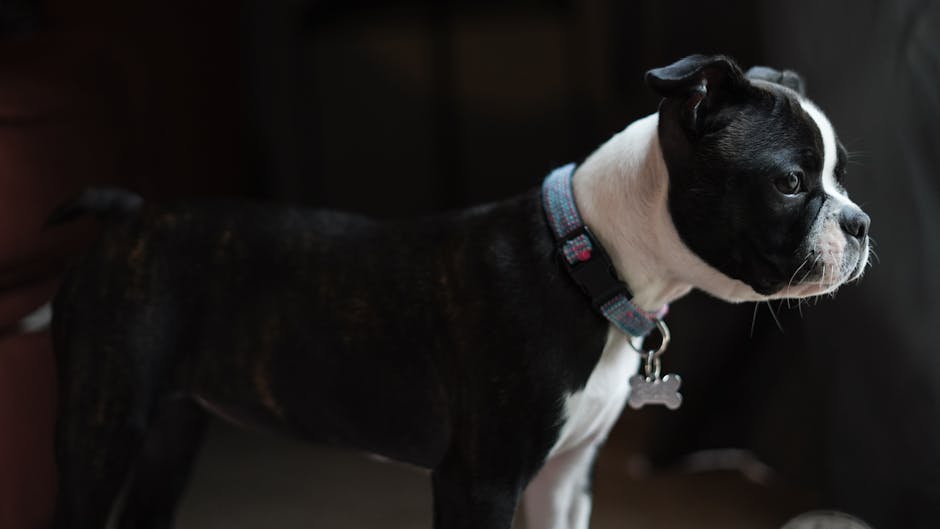
Ensuite, considérez l'épaisseur de la plaque. Les plaques épaisses (plus de 2 mm) peuvent être lourdes et faire tourner le collier, surtout sur un petit cou. Recherchez des plaques de 1 à 1,5 mm d'épaisseur. La forme compte aussi. Les plaques rondes sont classiques mais peuvent tourner et devenir difficiles à lire. Les plaques en forme d'os ou ovales ont tendance à rester à plat contre la poitrine. Certains propriétaires préfèrent les plaques « silencieuses » qui se fixent directement au collier avec une gaine en silicone, éliminant ainsi tout pendentif. C'est une excellente option pour les petits chiens gênés par le tintement.
Enfin, testez l'ajustement. Après avoir fixé la plaque, vérifiez qu'elle ne gêne pas les repas, la boisson ou le sommeil de votre chien. Si votre chien gratte la plaque ou essaie de l'enlever, c'est qu'elle est peut-être trop lourde ou trop grande. Les meilleures plaques d'identification pour petits chiens doivent être si confortables que votre chien oublie qu'il la porte. Les plaques de Pethna sont conçues pour les petites races : elles sont ultra-fines (1,2 mm), pèsent seulement 4 grammes et sont livrées avec un petit anneau fendu qui s'adapte même aux colliers les plus étroits. De plus, le code QR est placé sur les deux faces, pour qu'il soit scannable quelle que soit la rotation de la plaque.
Questions fréquemment posées
Q1 : Les plaques d'identification à code QR sont-elles sûres pour les petits chiens ?
Absolument. Les plaques à code QR sont fabriquées à partir de matériaux légers et non toxiques, sans danger pour toutes les races. Le code QR lui-même n'est qu'un motif de carrés noirs – pas de rayonnement, pas d'électronique. C'est purement optique. Les plaques de Pethna sont sans BPA, hypoallergéniques et possèdent des bords arrondis pour éviter les irritations. Elles sont également imperméables, votre chien peut donc nager, jouer sous la pluie ou salir sa plaque sans aucun risque.
Q2 : Comment mettre à jour mes coordonnées sur une plaque Pethna ?
La mise à jour de vos informations est simple. Connectez-vous à votre compte Pethna sur notre site web ou notre application mobile, allez dans le profil de votre animal et modifiez les champs (téléphone, e-mail, adresse, etc.). Les modifications prennent effet immédiatement – pas besoin d'acheter une nouvelle plaque. C'est particulièrement utile si vous déménagez, changez de numéro de téléphone ou ajoutez un contact d'urgence.
Q3 : Que faire si quelqu'un n'a pas de smartphone pour scanner le code QR ?
Bien que la plupart des gens aient aujourd'hui un smartphone, nous comprenons que ce n'est pas toujours le cas. C'est pourquoi les plaques Pethna incluent également un petit texte gravé avec le nom de votre animal et votre numéro de téléphone au dos. Ainsi, même si un découvreur ne peut pas scanner le code, il peut toujours vous appeler. Le code QR est une couche supplémentaire de commodité et de données, et non un remplacement de l'identification traditionnelle.
Q4 : Puis-je utiliser une plaque Pethna sur un harnais plutôt que sur un collier ?
Oui, vous pouvez attacher la plaque à n'importe quel anneau en D sur un harnais ou un collier. Cependant, nous recommandons de la placer sur le collier car celui-ci est moins susceptible d'être retiré par votre chien. Si vous utilisez un harnais, assurez-vous que la plaque est bien fixée et ne pend pas dans les mouvements des pattes de votre chien. Pour les petits chiens, un harnais est souvent plus confortable pour les promenades, mais la plaque d'identification doit rester sur le collier pour une visibilité maximale.
Pourquoi Pethna est la solution ultime pour les propriétaires de petits chiens
Après avoir exploré toutes les options disponibles, Pethna se démarque comme les meilleures plaques d'identification pour petits chiens pour plusieurs raisons convaincantes. Premièrement, nos plaques sont spécialement conçues pour les petites races. Avec seulement 4 grammes et 1,2 mm d'épaisseur, elles font partie des plus légères et des plus fines du marché. Votre petit Yorkie ou Maltais ne remarquera même pas qu'il la porte. Deuxièmement, notre design double face comporte un code QR gravé au laser sur le devant et un petit numéro de téléphone gravé au dos, garantissant que, quelle que soit la rotation de la plaque, un découvreur peut toujours identifier votre animal.
Troisièmement, notre plateforme numérique est sans égale. Lorsque quelqu'un scanne votre plaque Pethna, il voit une page nette et adaptée aux mobiles avec vos coordonnées, la photo de votre animal et toute alerte médicale. Vous pouvez mettre à jour ce profil instantanément depuis votre téléphone. De plus, notre système d'alerte pour animaux perdus notifie automatiquement un réseau d'utilisateurs Pethna à proximité et de refuges partenaires, multipliant ainsi les yeux qui cherchent votre chien. Pour les petits chiens qui peuvent facilement se cacher dans les buissons ou sous les porches, cet effet de réseau change la donne.
Quatrièmement, la durabilité. Les plaques Pethna sont imperméables, résistantes aux UV et conçues pour supporter la vie mouvementée d'un petit chien. Que votre chiot adore creuser dans le jardin, barboter dans les flaques ou se rouler dans l'herbe, la plaque restera lisible et scannable pendant des années. Nous offrons également une garantie de satisfaction et une politique de remplacement simple si votre plaque est perdue ou endommagée.
Enfin, nous comprenons le lien émotionnel qui vous unit à votre petit chien. C'est pourquoi chaque plaque Pethna est livrée avec un profil numérique gratuit qui comprend un générateur d'affiche « Animal perdu », une liste de contrôle pour les animaux perdus et une assistance 24h/24 et 7j/7. Nous ne vendons pas seulement une plaque – nous fournissons un système de récupération complet. Lorsque vous choisissez Pethna, vous choisissez la tranquillité d'esprit qui vient de la certitude que votre meilleur ami a les meilleures chances de rentrer à la maison. Ne vous contentez pas d'une plaque lourde et dépassée qui pourrait vous faire défaut au moment crucial. Offrez à votre petit chien la protection légère, intelligente et fiable qu'il mérite avec Pethna.