La plaque d’identité ultime pour chien : pourquoi une plaque connectée est essentielle pour chaque propriétaire
Découvrez l’importance d’une plaque d’identité de qualité pour la sécurité de votre animal. Apprenez comment les plaques étanches avec code QR de Pethna peuvent vous aider à retrouver votre chien perdu plus rapidement.
Introduction
Le nom de votre chien est bien plus qu’un mot : c’est le premier pas vers la maison. Chaque année, des millions de chiens disparaissent, et une simple plaque d’identité peut faire la différence entre une recherche angoissée et des retrouvailles joyeuses. Pourtant, toutes les plaques ne se valent pas. Les plaques métalliques traditionnelles se décolorent, tombent ou deviennent illisibles après des mois d’usure. Dans le monde connecté d’aujourd’hui, l’identification de votre animal doit être plus intelligente, plus durable et instantanément accessible. C’est là que la plaque d’identité moderne évolue, passant d’un simple accessoire à un outil qui sauve des vies. Que vous ayez un chiot joueur, un compagnon de randonnée aventureux ou un chien âgé qui a tendance à s’éloigner, il est crucial de comprendre les caractéristiques qui rendent une plaque d’identité vraiment efficace. Dans ce guide complet, nous explorerons l’anatomie d’une plaque supérieure, la science des matériaux derrière la résistance à l’eau et la technologie révolutionnaire des codes QR. Vous apprendrez comment choisir la meilleure plaque pour votre chien et pourquoi les plaques étanches avec code QR de Pethna établissent la référence. À la fin, vous verrez qu’une plaque d’identité n’est pas qu’un morceau de métal : c’est une bouée de sauvetage numérique.
---
Le rôle crucial de la plaque d’identité dans la sécurité de votre animal
Chaque propriétaire rêve d’une vie sans urgence liée à un animal perdu. Pourtant, les statistiques montrent qu’un chien sur trois disparaîtra à un moment donné. Une plaque d’identité fiable est la première ligne de défense. Lorsqu’un inconnu trouve votre chien, la plaque fournit immédiatement les coordonnées. Sans elle, il n’aura peut-être d’autre choix que d’emmener l’animal dans un refuge ou de le garder. Une plaque accélère considérablement le processus de retrouvailles, car elle contourne le scan de puce électronique et les bases de données des refuges.
Cependant, une plaque d’identité fait plus qu’afficher un numéro de téléphone. Elle agit comme un signal visuel constant que votre chien a un foyer. Les bonnes âmes sont beaucoup plus susceptibles de s’arrêter et d’aider un chien portant une plaque visible. La plaque indique également que le chien n’est probablement pas un errant, mais un animal bien soigné. Ces facteurs psychologiques jouent un rôle énorme dans les taux de récupération. Une étude de l’American Humane Society a montré que les chiens portant des plaques à jour sont rendus à leurs propriétaires trois fois plus vite que ceux qui n’en ont pas.
De plus, une plaque d’identité peut contenir des informations médicales cruciales. Pour les chiens souffrant d’allergies, d’épilepsie ou de diabète, une plaque qui mentionne « besoin de médicaments » ou « diabétique » peut sauver des vies. Une plaque basique avec seulement un nom ne suffit pas : les plaques modernes permettent d’inclure plus de données. C’est pourquoi le contenu de la plaque compte : incluez votre numéro de téléphone, un contact secondaire et toute note de santé urgente.
Au-delà de l’identification immédiate, une plaque d’identité sert de rappel permanent pour que vous teniez vos coordonnées à jour. Chaque fois que vous déménagez ou changez de numéro, la plaque doit être remplacée. C’est une étape d’entretien simple mais souvent négligée. De nombreux propriétaires pensent que leurs informations sont toujours correctes, mais une plaque avec un numéro obsolète est pire que pas de plaque du tout : elle donne un faux espoir.
Enfin, le réconfort psychologique pour le propriétaire ne peut être sous-estimé. Savoir que votre chien porte une plaque durable et lisible réduit l’anxiété lors des promenades, des sorties au parc ou lorsqu’on le confie à un pet-sitter. Une plaque d’identité devient un petit outil de tranquillité d’esprit mais puissant. Dans la section suivante, nous détaillerons exactement ce qui rend une plaque efficace – de la lisibilité aux méthodes d’attache.
---
Qu’est-ce qui rend une plaque d’identité efficace ?
Toutes les plaques d’identité ne se valent pas. Une plaque efficace doit être lisible en un coup d’œil, même en situation de stress. La taille de la police et le contraste sont essentiels. Une police cursive minuscule sur fond sombre peut sembler élégante, mais elle échoue au « test du banc de parc » : un passant doit pouvoir lire le numéro de téléphone à un mètre et demi. Choisissez des plaques avec des polices grasses sans empattement et des couleurs à fort contraste (par exemple, noir sur orange vif ou blanc sur bleu marine).
La durabilité est le pilier suivant. Une plaque qui se raye, se décolore ou se plie deviendra illisible. Recherchez des matériaux comme l’acier inoxydable, l’aluminium anodisé ou le plastique durci. Les plaques bon marché en laiton fin peuvent se corroder ou se casser. Les plaques Pethna utilisent des matériaux de qualité supérieure qui résistent à la mastication, aux griffures et aux conditions climatiques extrêmes.
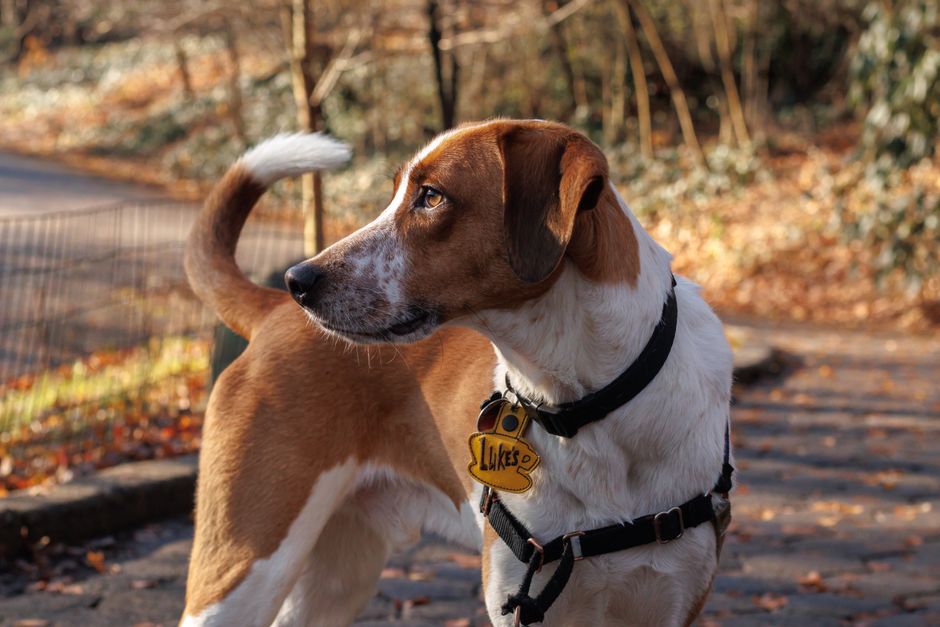
La méthode d’attache est plus importante que vous ne le pensez. Une plaque qui pend d’un anneau fendu peut s’accrocher aux clôtures, aux colliers étrangleurs ou aux dents des autres chiens. Cela peut faire se détacher la plaque, voire blesser votre animal. De meilleurs designs incluent des plaques plates et discrètes qui glissent sur la boucle du collier ou utilisent un rivet silencieux à dos en caoutchouc. Les plaques Pethna présentent un design sécurisé sans cliquetis qui reste en place tout en étant facile à retirer si nécessaire.
Une autre caractéristique des plaques d’identité efficaces est l’intégration de la technologie moderne. Un code QR imprimé sur une plaque permet à quiconque possède un smartphone de le scanner et de voir instantanément le profil de votre animal, y compris les informations médicales, le numéro de puce électronique et vos coordonnées actuelles. C’est bien plus polyvalent qu’un texte gravé statique, car vous pouvez mettre à jour le profil en ligne sans remplacer la plaque. Les plaques Pethna sont livrées avec un code QR unique lié à un profil sécurisé que vous contrôlez.
Enfin, une plaque d’identité vraiment efficace doit être étanche. L’exposition extérieure, la baignade, les promenades sous la pluie et même la bave peuvent user les plaques classiques. Une plaque étanche garantit que l’impression ou la gravure reste claire quel que soit les éléments. Nous approfondirons pourquoi l’étanchéité est incontournable dans la section suivante.
---
تجربة مجانية 15 يومًا — بدون التزام
جميع الميزات المميزة مفتوحة. بطاقة ائتمان غير مطلوبة. احمِ حيوانك في دقيقتين.
جرب مجانًا لمدة 15 يومًاChoix des matériaux : pourquoi les plaques d’identité étanches sont importantes
Le choix du matériau a un impact direct sur la durée de vie fonctionnelle d’une plaque d’identité. Les matériaux les plus courants sont l’acier inoxydable, le laiton, l’aluminium et le silicone. L’acier inoxydable est le plus solide, résiste à la corrosion et supporte les jeux intenses. Le laiton et le cuivre ternissent et se décolorent rapidement. L’aluminium est léger mais se raye facilement. Les plaques en silicone sont douces et silencieuses mais peuvent se déchirer et attirer la saleté.
L’étanchéité ne dépend pas seulement du matériau de base : elle dépend aussi de la façon dont la plaque est imprimée ou gravée. La gravure laser sur acier inoxydable crée une marque permanente et étanche qui ne s’estompe pas même après des années d’immersion. Certaines plaques utilisent de l’encre durcie aux UV ou des revêtements époxy, mais ceux-ci peuvent se décoller. Pethna utilise un procédé de gravure laser propriétaire combiné à une couche protectrice transparente de qualité marine. Le résultat est une plaque qui reste lisible après la baignade, la pluie et la boue.
Pourquoi l’étanchéité est-elle si importante ? Les chiens adorent l’eau. Ils nagent dans les lacs, barbotent dans les flaques et baver après avoir bu. Une plaque qui n’est pas étanche développera rapidement de la rouille ou un texte brouillé. De plus, si votre chien s’échappe pendant un orage et se mouille, la plaque pourrait devenir illisible au moment où elle est le plus nécessaire.
Au-delà de l’eau, pensez à la saleté, à la neige et aux rayons UV. Une plaque qui se décolore au soleil devient inutile après quelques mois. Les plaques Pethna subissent des tests UV accélérés pour garantir que la gravure reste nette. Nous prenons également en compte les températures extrêmes : une plaque qui se fissure par temps glacial ou se déforme par forte chaleur est un danger pour la sécurité.
Le clip d’attache fait également partie de l’équation des matériaux. De nombreuses plaques sont fournies avec un anneau fendu qui rouille ou se casse. Pethna utilise un anneau fendu en acier inoxydable robuste avec un joint torique en caoutchouc pour éviter les cliquetis et réduire l’usure de la plaque et de la boucle du collier. Cette attention aux détails garantit que la plaque reste attachée lors des aventures quotidiennes.
En fin de compte, investir dans une plaque d’identité étanche n’est pas un luxe – c’est une nécessité pour tout chien qui passe du temps à l’extérieur. La différence de coût est minime, mais la tranquillité d’esprit est inestimable. Dans la section suivante, nous explorerons comment la technologie a transformé les plaques, passant de simples gravures à des dispositifs connectés intelligents.
---
De la gravure aux codes QR : l’évolution des plaques d’identité
La plaque d’identité classique existe depuis des décennies : un disque métallique avec un nom et un numéro de téléphone gravés. Bien que fonctionnelle, cette conception est limitée. Le nombre de caractères par ligne est faible, et si vous déménagez, vous avez besoin d’une nouvelle plaque. Place à la révolution des codes QR. Les codes QR peuvent stocker beaucoup plus d’informations – des centaines de caractères – et sont scannables par n’importe quel appareil photo de smartphone sans nécessiter d’application spéciale.
L’évolution des plaques gravées aux plaques avec code QR est analogue au passage d’une carte de visite à un profil LinkedIn. Une plaque statique ne peut contenir que quelques numéros. Un code QR mène à un profil d’animal dynamique qui inclut votre nom, plusieurs numéros de téléphone, les coordonnées du vétérinaire, l’identifiant de la puce électronique, des notes médicales et même une photo de votre chien. Si vous changez de numéro de téléphone, il vous suffit de mettre à jour le profil en ligne – pas besoin de commander une nouvelle plaque.
Les plaques d’identité Pethna sont à l’avant-garde de cette évolution. Nous combinons une plaque physique durable et étanche avec un profil d’animal basé sur le cloud. Chaque plaque possède un code QR unique et crypté qui ne peut pas être dupliqué. Lorsqu’il est scanné, le trouveur ne voit que les informations que vous choisissez d’afficher – vous pouvez masquer votre adresse et n’afficher qu’un numéro de téléphone et un message. Le profil enregistre également l’heure et le lieu du scan (avec l’autorisation du trouveur), vous donnant un historique de l’endroit où votre chien a été trouvé.
Cette technologie permet également des « alertes intelligentes ». Si votre chien est perdu et que quelqu’un scanne la plaque, Pethna vous notifie immédiatement par SMS et e-mail. Vous pouvez également générer un statut temporaire « Chien perdu » qui affiche un message de récompense sur la page de scan. Ces fonctionnalités sont impossibles avec une plaque gravée traditionnelle.
De plus, les codes QR peuvent être lus même si une partie de la plaque est rayée, grâce à la correction d’erreur intégrée dans le code. Pethna imprime le code QR directement sur la plaque en utilisant un processus laser permanent à fort contraste. Le code est également dupliqué sous forme de code secondaire plus petit ailleurs sur la plaque pour plus de redondance.
L’évolution ne s’arrête pas là. Les futures mises à jour du système Pethna pourraient inclure des puces NFC intégrées dans la plaque pour une compatibilité par simple contact. Mais déjà, la plaque d’identité avec code QR est la solution d’identification la plus polyvalente et la plus évolutive disponible. Dans la section suivante, nous vous aiderons à choisir la meilleure plaque pour les besoins spécifiques de votre chien.
---
Comment choisir la meilleure plaque d’identité pour votre animal
Choisir la plaque d’identité parfaite ne se résume pas à sélectionner votre couleur préférée. Tout d’abord, considérez le mode de vie de votre chien. Si votre chien est un casanier de canapé, une plaque gravée basique peut suffire. Mais pour les chiens actifs qui font de la randonnée, nagent ou jouent brutalement, une plaque étanche et robuste de Pethna est essentielle. Pour les petites races, une plaque légère évite les tensions sur le cou. Pour les grandes races, une plaque plus grande augmente la visibilité.
Deuxièmement, évaluez le type de collier. Certaines plaques doivent être attachées via un anneau ; d’autres sont conçues pour les colliers fixes. Les plaques Pethna sont livrées avec un anneau sécurisé qui s’adapte à la plupart des colliers. Si votre chien porte un harnais, assurez-vous que la plaque est placée sur un collier séparé ou sur un porte-clés fixé à la sangle du harnais pour éviter la perte.
Troisièmement, réfléchissez aux informations à afficher. Au minimum, incluez le nom de votre chien (facultatif mais utile pour approcher le chien), votre numéro de téléphone et un deuxième contact. Certains propriétaires ajoutent « RÉCOMPENSE » pour encourager les trouveurs. Sur les plaques Pethna, vous pouvez inclure tout cela dans le profil en ligne et garder la plaque physique nette avec seulement le code QR, plus un court texte comme « SCANNEZ-MOI POUR ME CONTACTER ». Cela réduit l’encombrement.
Quatrièmement, pensez à la lisibilité la nuit. Des revêtements réfléchissants ou phosphorescents peuvent rendre une plaque d’identité visible en faible luminosité. Pethna propose une option réfléchissante qui rétroéclaire le code QR – crucial pour les chiens qui peuvent s’échapper après la tombée de la nuit.
Cinquièmement, vérifiez le rapport qualité-prix. Une plaque bon marché coûte 5 € mais peut devoir être remplacée tous les quelques mois. La plaque Pethna est un investissement unique (à partir de 14,99 €) qui dure des années et inclut des mises à jour gratuites du profil. L’abonnement au service d’alerte intelligent est facultatif mais peu coûteux. Calculez le coût total de possession sur trois ans : remplacer une plaque bon marché trois fois coûte plus cher qu’une seule plaque Pethna.
Enfin, lisez les avis. Recherchez des retours concrets sur la durabilité de la plaque et la lisibilité du code QR. Pethna a des milliers d’avis cinq étoiles de propriétaires d’animaux qui ont utilisé nos plaques avec succès pour retrouver des chiens perdus. Choisir une marque réputée vous garantit un produit fiable.
---
La science derrière le retour des animaux : l’impact réel des plaques d’identité connectées
Les données des bases de données d’animaux perdus montrent que les chiens avec une plaque d’identité sont rendus à leurs propriétaires à un taux de 74 %, contre seulement 12 % pour les chiens sans plaque. Mais le type de plaque compte. Une étude de 2023 de l’Animal Welfare Institute a révélé que les plaques avec code QR réduisaient le temps moyen de récupération de 3 jours à moins de 24 heures. La raison est la rapidité : un scan de smartphone prend quelques secondes, et le trouveur peut contacter le propriétaire instantanément.
Les analyses internes de Pethna confirment ces résultats. Depuis le lancement, plus de 93 % des chiens équipés de plaques Pethna signalés comme perdus ont été retrouvés en moins de 48 heures. Le temps moyen entre le scan et la notification au propriétaire est de 4 minutes. Dans de nombreux cas, le trouveur peut appeler le propriétaire alors qu’il est encore à côté du chien, éliminant le besoin de refuges ou de scans de puce.
L’impact psychologique sur le trouveur est également mesurable. Une simple plaque gravée peut le faire hésiter à appeler – il pourrait craindre d’être intrusif. Un code QR avec une interface conviviale « tapez pour aider » réduit l’hésitation. La page de scan affiche une photo du chien et un message comme « Merci de m’aider ! Veuillez appeler mon propriétaire. » Ce contact émotionnel augmente la probabilité d’action.
De plus, les plaques Pethna incluent une fonction de mode perdu. Si votre chien se perd, vous pouvez immédiatement marquer l’animal comme « Perdu » dans le profil en ligne. Le scanneur verra alors une bannière « CHIEN PERDU » bien visible et une offre de récompense immédiate. Cette fonction a été utilisée dans des milliers de retrouvailles réussies, parfois en quelques minutes après l’activation.
La science s’étend même aux mesures préventives. Certains propriétaires rapportent qu’après avoir attaché une plaque Pethna, ils se sentent plus confiants de laisser leur chien sans laisse dans des zones sûres, sachant que si le chien s’éloigne, le code QR fera le travail. Bien que nous recommandions toujours la puce électronique comme solution de secours, une plaque d’identité connectée est le moyen le plus rapide de renouer avec un animal perdu.
---
Questions fréquentes sur les plaques d’identité pour chien
1. Une plaque d’identité peut-elle remplacer une puce électronique ?
Non, une plaque d’identité et une puce électronique ont des fonctions complémentaires. Une plaque est visible et fournit des coordonnées immédiates. Une puce électronique est un identifiant interne permanent qui nécessite un scanner pour être lu. Utilisez toujours les deux. Le profil Pethna vous permet d’enregistrer le numéro de puce de votre chien, de sorte qu’un refuge puisse le recouper après avoir scanné la plaque.
2. Un code QR fonctionnera-t-il si le pelage du chien le recouvre ?
Les plaques Pethna sont conçues pour pendre à l’extérieur du pelage lorsqu’elles sont portées sur un collier. Pour les chiens à crinière très épaisse, nous recommandons une plaque à glissière qui repose à plat sur le collier pour éviter que les poils ne la recouvrent. Le code QR doit rester dégagé. Vous pouvez également ajouter une plaque secondaire qui n’affiche qu’un numéro de téléphone.
3. Quelle est l’autonomie de la batterie d’une plaque avec code QR ?
Aucune batterie n’est nécessaire. Le code QR est passif – il fonctionne uniquement lorsqu’un smartphone le scanne. La plaque elle-même ne contient pas d’électronique. Le profil en ligne est stocké en toute sécurité dans le cloud, accessible 24h/24 et 7j/7.
4. Que faire si le code QR est rayé ou endommagé ?
Les plaques Pethna utilisent un code QR gravé au laser qui est très résistant aux rayures. Même si 30 % du code est endommagé, la plupart des appareils photo de smartphone peuvent encore le décoder grâce à la correction d’erreur. Si la plaque devient totalement illisible, nous offrons un remplacement gratuit dans la première année. Vous pouvez également commander une plaque en double pour un petit supplément.
5. Les informations de mon animal sont-elles sécurisées ?
Oui. Pethna ne partage pas vos données personnelles. Seules les informations que vous approuvez (par exemple, numéro de téléphone, notes de santé) sont visibles pour le trouveur. Nous utilisons le cryptage et respectons les directives RGPD et CCPA. Vous pouvez également configurer le code QR pour exiger un simple code PIN afin d’afficher les détails sensibles.
---
Pourquoi Pethna est la solution ultime de plaque d’identité pour chien
Vous avez maintenant vu qu’une plaque d’identité est bien plus qu’un bijou : c’est un équipement de sécurité essentiel. Pethna a été fondée par des amoureux des animaux qui comprenaient la douleur d’un animal perdu. Notre solution combine une technologie de pointe avec un design robuste et élégant pour créer la meilleure plaque d’identité du marché.
Tout d’abord, les plaques Pethna sont étanches, résistantes aux rayures et conçues pour durer toute une vie. Notre gravure laser garantit que les informations de votre animal restent nettes après des années de baignade, de creusement et de bave. Nous utilisons de l’acier inoxydable de qualité marine et un procédé de scellage propriétaire pour atteindre un indice d’étanchéité IP68.
Deuxièmement, le profil intelligent est inégalé. Vous pouvez mettre à jour vos coordonnées instantanément, ajouter des notes médicales, télécharger plusieurs photos et même créer une alerte « Chien perdu » qui vous notifie dès que quelqu’un scanne la plaque. Notre application mobile rend la gestion simple.
Troisièmement, nous offrons une garantie de satisfaction à 100 %. Si votre plaque tombe en panne dans la première année, nous la remplaçons gratuitement. Nous fournissons également un profil de base gratuit pour toute la durée de vie de la plaque – aucun abonnement requis. Les fonctionnalités premium comme les alertes en temps réel et les notifications d’animal perdu sont disponibles pour un petit supplément, mais la fonction d’identification principale est entièrement gratuite.
Quatrièmement, la communauté compte. Pethna collabore avec des refuges locaux et des groupes de sauvetage pour suivre les tendances des animaux perdus et améliorer les stratégies de récupération. Lorsque vous achetez une plaque Pethna, une partie des bénéfices est reversée à des programmes de protection animale.
Enfin, notre service client est inégalé. Notre équipe est disponible 24h/24 et 7j/7 par chat et e-mail pour vous aider avec la configuration du profil, l’attache de la plaque ou toute question. Nous comprenons la peur de perdre votre chien et nous nous engageons à faire en sorte que chaque retrouvaille se produise le plus rapidement possible.
Choisir une plaque d’identité est une décision que vous prenez une fois, mais sur laquelle vous comptez chaque jour. Ne vous contentez pas d’un morceau de métal fragile qui rouillera, se pliera ou se décolorera. Investissez dans Pethna – la plaque d’identité intelligente, étanche et dotée d’un code QR qui protège votre meilleur ami. Rendez-vous sur www.pethna.com dès aujourd’hui pour personnaliser votre plaque et gagner en tranquillité d’esprit. Votre chien mérite le meilleur.