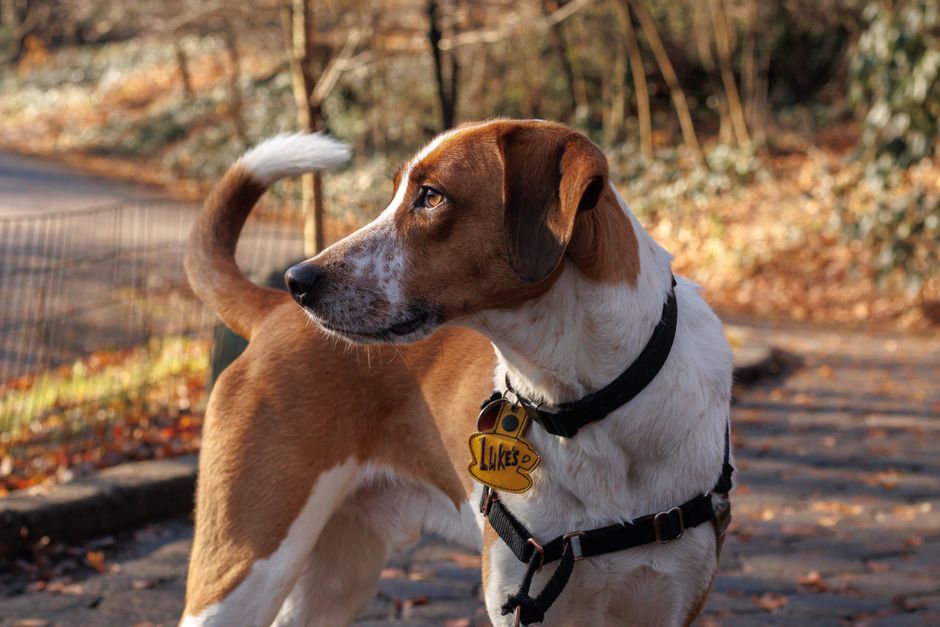
Engraved Tag for Dog: Is It Still the Best Choice in 2026?
Discover the pros and cons of traditional engraved tags for dogs and learn why modern waterproof QR code tags like Pethna offer superior pet recovery in 2026.
Why the Engraved Tag for Dog Remains a Beloved Classic
For decades, the engraved tag for dog has been the go‑to identification method for pet owners around the world. There is something undeniably tactile and reassuring about a polished piece of metal that bears your best friend’s name and your phone number. The tradition of hanging a jangling ID tag on a collar goes back generations, and for many owners, an engraved tag feels like the most straightforward way to ensure a lost dog can be returned home. The process is simple: you select a shape, choose a font, and a machine cuts the letters into stainless steel, brass, or anodized aluminum. The result is durable, often weather-resistant, and permanently legible as long as the metal is not scratched beyond recognition.
However, the world of pet identification has evolved dramatically. In an age where a smartphone is never far from a person’s hand, the engraved tag for dog faces stiff competition from digital solutions. Yet, its enduring popularity is rooted in a few powerful advantages: it requires no battery, no internet connection, and no monthly subscription. You put it on the collar and it works the moment someone finds your pet. The simplicity is appealing. Moreover, an engraved tag is a physical object that can be read instantly by anyone, including elderly finders who may not be tech‑savvy. It does not rely on a QR code scanner app or a website that might be down. The directness of engraved text — a name and a phone number — is as old as the telephone itself.
But is that simplicity enough in 2026? Pet theft, urban sprawl, and the increasing number of stray animals mean that a basic engraved tag for dog may no longer provide the level of safety that modern pet owners expect. Many owners have experienced the frustration of a tag that becomes unreadable after a few months of wear, especially if the dog swims, rolls in mud, or plays rough with other dogs. The engraving can fade, the metal can tarnish, and the holes can weaken until the tag falls off altogether. These real-world problems have prompted a search for something more robust and more connected.
In this comprehensive guide, we will explore every facet of the engraved tag for dog, from its advantages to its hidden pitfalls. We will then compare it directly with the next generation of pet ID — the waterproof QR code tag — to help you decide which solution truly gives your dog the best chance of coming home. Whether you are a first‑time puppy owner or a seasoned multi‑pet household, understanding these differences could save your dog’s life.
The Hidden Limitations of Traditional Engraved Tags
At first glance, an engraved tag for dog seems foolproof. But beneath the polished surface lie several limitations that can seriously compromise its effectiveness. The most obvious issue is wear and tear. Even the hardest metals eventually degrade. Stainless steel tags resist corrosion well, but the engraved letters can fill with dirt, making them hard to read. Brass tags develop a patina that obscures the text. Anodized aluminum can chip, and the underlying metal may contrast poorly. Over time, the tag becomes a blurry piece of metal that a finder might ignore or misread.
Another critical limitation is the amount of information you can fit on a tag. A typical round tag holds about three lines of text: dog’s name, phone number, and perhaps “MEDICAL ALERT.” The letters must be large enough to be read from a few inches away, which severely limits the space. You cannot include a secondary contact, a microchip number, a vet’s number, or any medical history. If your primary phone number is disconnected or you are traveling abroad, the tag becomes useless. The engraved tag for dog is static — it cannot be updated without buying a completely new tag.
Durability also concerns the attachment hardware. The split ring or S‑hook that holds the tag can bend or break. Many owners have found an empty collar without the tag, meaning the dog lost identification at the worst possible moment. Even if the tag stays attached, constant jingling can be annoying for both the dog and the owner. Some dogs learn to chew on the metal, bending it into illegibility.
Perhaps the most overlooked drawback is the lack of real-time tracking. An engraved tag for dog only works if the finder physically calls the number on the tag. If the finder is busy, scared, or does not speak your language, they may not call. They might take the dog to a shelter, but the shelter may not attempt to call if the tag is illegible. In many countries, shelters rely on microchip scanners first. If your dog’s microchip is not registered or the scanner reads a different chip, the engraved tag may be your last hope — but it is a hope that relies entirely on the goodwill and capability of a stranger.
Finally, there is the issue of pet privacy. An engraved tag for dog often includes the dog’s name and your phone number, which is personal information displayed to anyone who walks past your dog. Some owners worry about strangers knowing their dog’s name (which can be used to lure the dog) or having direct access to their phone number. This risk is small but real, especially in areas with pet theft concerns.
Engraved Tag for Dog vs. Smart QR Code Tags: A Feature-by-Feature Comparison
To truly understand whether an engraved tag for dog is still the best choice, let us compare it side by side with the modern alternative: a waterproof QR code pet tag, such as the one offered by Pethna.
Durability and Readability
An engraved tag relies on a physical impression. With enough scratching or tarnishing, the text becomes unreadable. Pethna’s QR code tag is made from high‑grade stainless steel or silicone with a laser‑etched QR code that is extremely resistant to wear. The code can be scanned even if the tag is dirty or slightly scuffed. The QR code itself is a digital pattern that can be read by any smartphone camera without needing a special app. This means the finder can instantly access a secure online profile.
Information Capacity
An engraved tag for dog can display at most four short lines of text. Pethna’s profile can hold unlimited information: your phone number, email, secondary contact, medical notes (e.g., “diabetic,” “on medication”), microchip number, vet details, and even a photo of your dog. You can update this information anytime from your phone or computer without buying a new tag. If you move, change your number, or adopt a new dog, you simply edit the profile — the same physical tag stays.
Findability and Recovery Speed
With an engraved tag, a finder must manually dial your number. If you do not answer, they may give up or leave a voicemail that you might miss. With Pethna, the finder scans the QR code, lands on your dog’s profile, and sees a “Contact Owner” button that sends an instant notification to your phone via SMS, email, or push notification. There is also a built‑in map showing the finder’s location (if they allow it), so you know exactly where your dog was found. Multiple people can be notified simultaneously.
Privacy and Security
An engraved tag for dog exposes your phone number publicly. Pethna’s QR code hides your personal contact details from the public; the finder only sees a contact form or a one‑time code to call you through a masked number. Your private information stays behind a secure login.
Cost Over Time
An engraved tag typically costs $8–$25, and you must buy a new one every time you need to update information. Pethna’s tag is a one‑time purchase (around $20–$30) that includes lifetime profile updates. No subscription fees. Over the life of your dog, the smart tag can be more economical.
Global Use
Engraved tags are language-dependent — if you travel to a country where your phone number doesn’t work, the tag is useless. Pethna’s QR code links to a multilingual profile that can be displayed in the finder’s language. The finder can also send you a message in their language, which gets translated automatically.
Microchip Integration
An engraved tag for dog cannot integrate with microchip registries. Pethna allows you to store your microchip number, and some shelters can scan the code to find your chip record. This creates a unified digital identity.
| Feature | Engraved Tag for Dog | Pethna QR Code Tag |
|---------|-------------------|-------------------|
| Readability after months of wear | Declines | Remains scannable |
| Information capacity | 3–4 lines | Unlimited (online profile) |
| Updateable information | No (buy new tag) | Yes (free, instant) |
| Finders need special app? | No | No (any smartphone) |
| Privacy of owner’s number | Exposed | Hidden |
| Real‑time notification | No | Yes |
| Multi‑language support | No | Yes |
| Cost over dog’s lifetime | Higher if updates needed | Lower (one purchase) |
15-day free trial — No commitment
All premium features unlocked. No credit card required. Protect your pet in 2 minutes.
Try free for 15 daysWhen an Engraved Tag for Dog May Still Be the Right Choice
Despite the many advantages of smart QR tags, an engraved tag for dog is not entirely obsolete. There are specific scenarios where a traditional engraved tag might be the preferable option. First, if you own a senior dog that rarely leaves the house and is always under supervision, the simplicity of an engraved tag may suffice. Second, for owners who are not comfortable using smartphones or digital platforms, a physical tag with a phone number might feel more reliable. Third, some multi‑dog households use engraved tags as a quick visual identifier — you can see which dog is which by the shape or color of the tag.
Another valid use case is for dogs that are prone to losing any tag. If your dog plays aggressively, rolls in mud, or swims in salt water frequently, a cheap engraved tag is expendable. However, note that Pethna’s silicone QR tags are extremely durable, and even the stainless steel version is built to withstand rough play. But for owners who prefer to spend as little as possible on identification (for example, in a foster home with many temporary dogs), a basic engraved tag for dog at $5 is hard to beat.
Finally, some local regulations require a visible rabies vaccination tag or license. These are often separate tabs, but some owners combine them with an engraved tag. In jurisdictions where a physical tag is mandatory by law, you will need something on the collar anyway. An engraved tag can serve double duty — meeting the legal requirement while providing your contact info. Yet, you could also attach a Pethna tag alongside the required license tab for maximum coverage.
In short, an engraved tag for dog is still a viable option if your dog’s lifestyle is low‑risk, you are comfortable with its limitations, and you are willing to replace it whenever details change. But if you consider the potential heartbreak of losing a dog, the small investment in a smarter alternative is often worth it.
How to Choose the Best Engraved Tag for Dog: Material, Size, and Legibility
If you decide that an engraved tag for dog is right for you, selecting the best one involves careful attention to material, size, and text formatting. These factors directly affect how long the tag remains readable and how likely a finder will use it.
Material
- Stainless steel: Best overall durability. Resistant to rust and scratches. Choose a brushed or matte finish to reduce glare.
- Anodized aluminum: Lightweight and colorful, but the anodized layer can chip. Engraving may expose silver metal that contrasts well.
- Brass: Classic look, but tarnishes quickly unless coated. Many owners find brass hard to read after a few months.
- Plastic or acrylic: Very cheap, but easily cracked or chewed. Avoid if your dog is a chewer.
The tag should be proportional to your dog’s size. For a Chihuahua, a tag larger than a quarter may be too heavy. For a Great Dane, a tiny tag may be lost. Round tags are classic but can spin and hide the text. Bone‑shaped or oval tags offer more surface area for text. Consider placing the tag on a collar that does not rotate excessively, or use a tag silencer to reduce wear.
Legibility
- Font: Use a sans‑serif font (like Arial or Helvetica) in ALL CAPS. Avoid script or italic fonts.
- Depth of engraving: Deep engraving (0.3–0.5 mm) lasts longer than laser etching. Laser etching on stainless steel is still durable but can fade under heavy abrasion.
- Contrast: Dark text on a light metal (e.g., black fill on silver) is easiest to read. Some tags offer colored epoxy fill to enhance contrast.
- Text layout: Place the most critical info — phone number — on the first line. Owner’s name is optional; some omit the dog’s name for privacy.
A strong split ring (preferably welded) is essential. Some tags come with rubber silencers that prevent jingling and reduce wear. Check the ring periodically for corrosion or bending.
Dual ID
Many owners now pair an engraved tag for dog with a microchip. The tag should ideally include the microchip number and the phrase “MICROCHIPPED” so finders know to scan. However, be aware that a microchip number alone is not enough — the finder must call the registry, which can be slow.
Frequently Asked Questions About Engraved Tags for Dogs
1. Can I wash a stainless steel engraved tag for dog?
Yes. Stainless steel is water‑resistant. You can clean it with mild soap and a soft cloth. Avoid abrasive scrubbers that can remove the engraved fill. If the tag gets muddy, rinse it gently. For tags with colored epoxy, avoid soaking in bleach or harsh chemicals.
2. How often should I replace an engraved tag for dog?
Replace the tag every time your contact information changes — phone number, address, or vet. Also replace it if the engraving becomes hard to read (e.g., letters filled with dirt, metal worn thin) or if the attachment ring shows signs of fatigue. Many experts recommend checking the tag monthly and replacing it at least every two years even if it looks fine, because metal can fatigue unnoticed.
3. Are there any safety concerns with an engraved tag for dog?
The main safety concern is the risk of the tag getting caught on objects (fences, crates, branches). A dangling tag can hook and potentially choke the dog. Consider using a tag that sits flat against the collar or a “dog tag silencer” that covers the holes. Also, ensure the tag is not too heavy for small dogs — a heavy tag can strain the neck over time. Pethna’s QR tags are lightweight and designed with a low‑profile shape to minimize snagging risk.
4. Can I use an engraved tag for dog along with a QR code tag?
Absolutely. Many pet owners use both for redundancy. An engraved tag provides a backup if the finder cannot or will not scan a QR code, while the QR code offers the digital advantages. This “belt and suspenders” approach is the most secure method. Some owners attach a small engraved tag with just a phone number and a larger Pethna tag with the full profile. Ensure both tags are attached securely and that the total weight is not excessive for your dog.
Why Pethna Is the Ultimate Solution Over Any Engraved Tag for Dog
After weighing every consideration, it becomes clear that while a traditional engraved tag for dog is not useless, it is a technology of the past. The modern world demands a smarter, more flexible, and more reliable method of pet recovery. Pethna’s waterproof QR code pet tag is the embodiment of that evolution. Here is why Pethna is the ultimate choice for any pet owner who truly wants their dog to come home safely.
Unmatched Durability Meets Digital Intelligence
Pethna tags are crafted from premium stainless steel or flexible silicone, both fully waterproof and resistant to scratches, rust, and fading. The QR code is laser‑etched, not printed, so it remains scannable even after years of wear in the rain, snow, or swimming. Unlike an engraved tag for dog, which gradually loses legibility, Pethna’s code can be read by any smartphone camera under almost any condition. The digital profile behind the code never degrades.
Instant Global Notifications
The moment a finder scans your dog’s Pethna tag, you receive an instant alert with their approximate location (GPS coordinates from their phone). You can respond immediately via text or call (with a masked number for privacy). No waiting for a phone call that might never come. The finder also sees a photo of your dog, so they can confirm it is your animal. This speed is critical — every minute counts when a pet is lost.
Endless Customizability Without Extra Cost
Your dog’s profile on Pethna can include multiple phone numbers, email addresses, a secondary contact, medical conditions, microchip ID, vet details, and even a reward note. If your phone number changes or you go on vacation, you update the profile in seconds. There is never a need to order a new tag. Over the lifetime of your dog, this saves both money and hassle compared to buying new engraved tags each time you move or change carriers.
Privacy and Peace of Mind
Your personal contact details are never exposed to the public. The finder only sees a secure contact form or a temporary masked phone number. This protects you from spam calls, pranks, and potential thieves. Meanwhile, you can see exactly who scanned the tag and when, giving you a digital record of every attempt to return your dog.
Community and Recovery Network
Pethna is more than a tag — it is a community. When you report your dog as lost through the Pethna app, the system automatically alerts nearby users and local shelters who also use Pethna. This network effect dramatically increases the chances of recovery. An engraved tag for dog cannot alert anyone beyond the person who physically finds the collar.
Backed by Real Success Stories
Thousands of pet owners have switched from traditional engraved tags to Pethna and have seen their dogs returned in minutes rather than hours. Many share stories of how the QR code was scanned while the dog was still wandering, allowing the owner to arrive before the dog was taken to a shelter. The peace of mind is priceless.
In conclusion, an engraved tag for dog has served pet owners well for generations, but the risks of fading text, lack of updates, and dependence on a single phone number are too great in 2026. Pethna combines the durability of a physical tag with the power of a digital safety net. It is the smarter, safer, and ultimately more effective solution for bringing your best friend home. Visit Pethna.com today and join the thousands of pet owners who never have to worry about “what if” again. Your dog deserves nothing less.

