La plaque d’identité ultime pour chat : pourquoi votre félin a besoin d’une plaque QR code intelligente
Découvrez pourquoi une plaque gravée traditionnelle ne suffit pas. Apprenez comment une plaque d’identité moderne, étanche et à QR code pour chat peut vous reconnecter instantanément avec votre félin perdu, avec des histoires de retrouvailles réelles et des conseils de sécurité d’experts.
Introduction
Tout propriétaire de chat connaît ce sentiment de panique quand une porte reste entrouverte ou qu’une moustiquaire est poussée. Les chats sont des maîtres de l’évasion, poussés par la curiosité, l’instinct ou le simple ennui. En une fraction de seconde, votre félin d’intérieur peut devenir un explorateur de l’extérieur, et le monde devient soudain un endroit très dangereux. Si les puces électroniques constituent une excellente solution de secours, elles sont passives : elles ne fonctionnent que si la personne qui trouve votre chat l’emmène chez un vétérinaire ou un refuge et scanne effectivement la puce. C’est là qu’une plaque d’identité pour chat visible, durable et intelligente devient votre première ligne de défense. Une plaque est le moyen le plus rapide pour un inconnu d’identifier votre animal et de vous contacter immédiatement, sans équipement spécial ni visite chez le vétérinaire.
Mais toutes les plaques ne se valent pas. La plaque métallique gravée classique existe depuis des décennies, mais elle présente de sérieuses limites : elle peut rouiller, se décolorer ou devenir illisible avec le temps. Pire encore, elle ne contient qu’un numéro de téléphone, qui peut être obsolète ou injoignable. En cas d’urgence, chaque seconde compte. C’est pourquoi l’industrie de la sécurité des animaux de compagnie a évolué, et les plaques intelligentes à QR code comme celles de Pethna sont désormais la référence. Elles combinent la simplicité d’une plaque visuelle avec la puissance d’un profil numérique dynamique, modifiable instantanément.
Dans ce guide complet, nous allons explorer tout ce que vous devez savoir pour choisir la plaque d’identité pour chat parfaite. Nous analyserons les avantages et les inconvénients des plaques traditionnelles, expliquerons pourquoi la technologie QR code change la donne, et vous montrerons exactement comment les plaques étanches et durables de Pethna peuvent vous offrir la tranquillité d’esprit. Que vous ayez un chaton curieux ou un artiste de l’évasion chevronné, la bonne plaque peut faire la différence entre une recherche frénétique et des retrouvailles heureuses. Plongeons dans les détails que tout propriétaire responsable doit connaître.
Pourquoi chaque chat a besoin d’une plaque d’identité adaptée
C’est une idée reçue courante que les chats d’intérieur n’ont pas besoin d’identification. En réalité, même le chat d’intérieur le plus prudent peut s’échapper lors d’une visite de réparation, d’une fête de famille ou d’un simple moment d’inattention. Selon l’American Humane Society, seulement 2 % des chats perdus sans plaque d’identité sont retrouvés par leurs propriétaires. Ce chiffre grimpe considérablement – à plus de 20 % – pour les chats portant une identification visible. Une simple plaque d’identité pour chat est l’outil le plus efficace pour des retrouvailles rapides, car elle ne demande aucun effort à la personne qui trouve l’animal, au-delà de lire un numéro ou de scanner un code.
Au-delà des statistiques, pensez au poids émotionnel d’un animal perdu. Les heures et les jours qui suivent une disparition sont remplis d’anxiété, de culpabilité et de recherches frénétiques. Affiches, publications sur les réseaux sociaux et visites dans les refuges sont épuisants et souvent infructueux. Une plaque visible transforme chaque personne qui voit votre chat en sauveteur potentiel. Un voisin, un facteur ou un enfant qui joue dehors peut immédiatement voir que le chat a un propriétaire et qu’il existe un moyen de vous contacter. Cette connexion immédiate peut empêcher votre chat de s’éloigner davantage, de se faire renverser par une voiture ou de tomber entre les mains de quelqu’un qui pourrait le garder sans vérifier la présence d’une puce électronique.
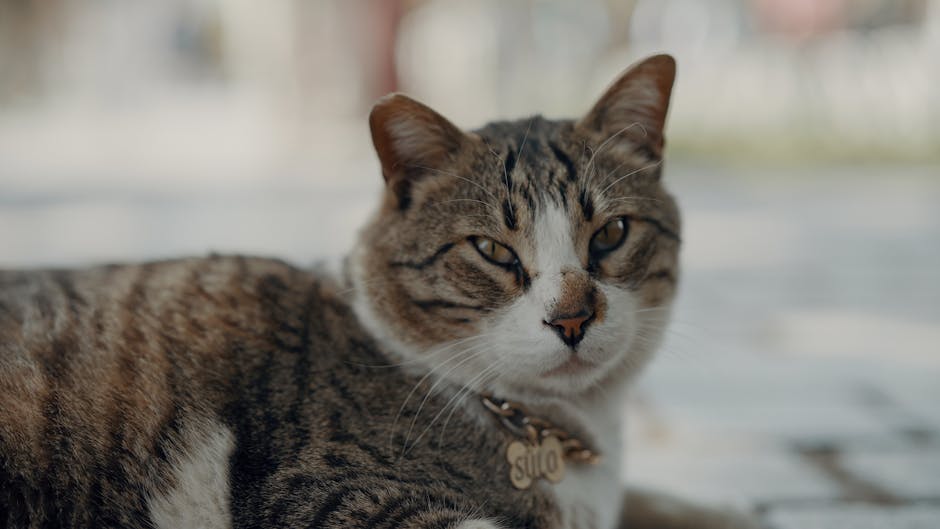
De plus, une plaque sert de signal clair que votre chat est aimé et soigné. Elle dissuade les personnes bien intentionnées mais mal informées de supposer que le chat est errant et de l’adopter. De nombreux chats sont « adoptés » par de nouvelles familles simplement parce qu’ils semblaient amicaux et ne portaient pas d’identification visible. Une plaque avec vos coordonnées ou un QR code renvoyant à votre profil clarifie instantanément la situation. Elle fournit également des informations médicales cruciales – comme les allergies ou les médicaments – dont un sauveteur ou un vétérinaire d’urgence pourrait avoir besoin. En bref, une plaque d’identité n’est pas seulement un confort, c’est un équipement de sécurité fondamental pour tout chat, quel que soit son mode de vie.
Les dangers cachés des plaques gravées traditionnelles
Pendant des années, la plaque d’identité pour chat standard a été un petit disque métallique avec du texte gravé. Bien que ces plaques aient aidé à retrouver d’innombrables animaux, elles présentent une série de dangers cachés et de limitations que de nombreux propriétaires négligent. Le problème le plus évident est la durabilité. Les plaques métalliques peuvent rouiller, surtout si elles sont exposées à l’humidité (pluie, gamelles d’eau, ou même la salive du chat lors du toilettage). La rouille rend non seulement la plaque inesthétique, mais peut aussi rendre le texte gravé illisible. Une plaque illisible est essentiellement inutile.
Un autre problème majeur est le caractère statique des informations gravées. Si vous déménagez, changez de numéro de téléphone ou ajoutez un nouveau contact d’urgence, vous devez commander une toute nouvelle plaque. C’est contraignant et conduit souvent les propriétaires à retarder la mise à jour – ou à ne jamais la faire. Une plaque avec un numéro de téléphone obsolète est pire que pas de plaque du tout, car elle donne un faux sentiment de sécurité. La personne qui trouve l’animal peut appeler l’ancien numéro plusieurs fois, ne pas obtenir de réponse, puis supposer que le chat est abandonné ou que le propriétaire ne s’en soucie pas. Cela peut conduire à ce que le chat soit replacé ou emmené inutilement dans un refuge.
La sécurité est une autre préoccupation cruciale. Les plaques métalliques traditionnelles peuvent être lourdes, surtout pour les petits chats ou les chatons. Le poids peut provoquer des tensions cervicales ou de l’inconfort. Plus alarmant encore, les bords tranchants d’une plaque métallique usée ou endommagée peuvent griffer la peau de votre chat ou s’accrocher aux meubles, tapis ou branches, pouvant entraîner des blessures ou un étranglement. Les colliers à fermeture de sécurité sont conçus pour éviter cela, mais une plaque métallique lourde peut contrecarrer cet avantage en ajoutant trop de poids. Enfin, les plaques gravées n’offrent aucune confidentialité. Votre nom complet, votre adresse et votre numéro de téléphone sont visibles par tout le monde. Bien que cela soit destiné à aider, cela expose également vous et votre famille à des risques potentiels pour la vie privée. Une plaque intelligente à QR code résout tous ces problèmes en étant légère, durable, modifiable et privée.
Essai gratuit 15 jours — Sans engagement
Toutes les fonctionnalités premium débloquées. Sans carte bancaire. Protégez votre animal en 2 minutes.
Essayer gratuitementQu’est-ce qui fait une excellente plaque d’identité pour chat ?
Lorsque vous cherchez la plaque d’identité pour chat parfaite, vous devez évaluer plusieurs caractéristiques clés qui vont au-delà de l’esthétique. Le premier et le plus important facteur est la lisibilité. Une plaque n’est utile que si une personne peut accéder rapidement et facilement à vos informations. Les plaques gravées traditionnelles reposent sur un texte clair et suffisamment grand pour être lu, ce qui est difficile sur les petites plaques. Les plaques à QR code, en revanche, peuvent être scannées par n’importe quel appareil photo de smartphone, affichant instantanément un profil numérique. Cela élimine le problème du texte minuscule et usé, et garantit que la personne qui trouve l’animal obtient toutes les informations nécessaires en quelques secondes.
La durabilité est le deuxième pilier. La plaque de votre chat sera exposée aux éléments – pluie, neige, boue, et même une trempette occasionnelle dans une gamelle d’eau. Elle doit être étanche et résistante à la corrosion. Recherchez des plaques en acier inoxydable, en aluminium anodisé ou en silicone de qualité médicale. Évitez le plastique bon marché ou le métal fin qui peut se fissurer ou se plier. Les plaques Pethna, par exemple, sont fabriquées à partir de matériaux haut de gamme, à la fois légers et pratiquement indestructibles. Elles sont conçues pour résister à des années d’aventures en extérieur sans se décolorer, rouiller ou se casser.
Les caractéristiques de sécurité sont non négociables. La plaque doit être suffisamment légère pour ne pas fatiguer le cou de votre chat. Elle doit également être compatible avec un collier à fermeture de sécurité, qui est le type de collier le plus sûr pour les chats. Un collier à fermeture de sécurité se détache sous pression si le chat se coince quelque part, évitant ainsi l’étouffement ou les blessures. La plaque elle-même doit avoir des bords lisses et arrondis pour éviter les griffures. Enfin, considérez la technologie derrière la plaque. Une plaque intelligente à QR code offre des mises à jour dynamiques : vous pouvez modifier vos coordonnées, ajouter des notes médicales ou même télécharger une photo de votre chat sans jamais remplacer la plaque physique. Cette flexibilité change la donne pour les propriétaires d’animaux occupés.
Comment la technologie QR code révolutionne le retour des animaux perdus
Le passage d’une plaque gravée statique à une plaque d’identité pour chat à QR code équivaut à passer d’un téléphone fixe à un smartphone. Les QR codes, ou codes Quick Response, sont des codes-barres bidimensionnels qui peuvent être scannés par n’importe quel appareil photo de smartphone moderne. Lorsqu’une personne scanne le code sur la plaque de votre chat, elle est dirigée vers une page web sécurisée et privée contenant le profil de votre animal. Ce profil peut inclure votre numéro de téléphone, votre e-mail, des contacts alternatifs, des informations médicales et même une photo de votre chat. Le meilleur dans tout ça ? Vous pouvez mettre à jour ces informations instantanément depuis votre téléphone ou votre ordinateur, sans avoir à acheter une nouvelle plaque.
Cette nature dynamique résout le plus gros problème des plaques traditionnelles : les informations obsolètes. Si vous déménagez ou changez de numéro, il vous suffit de vous connecter à votre compte Pethna et de mettre à jour votre profil. La plaque elle-même ne change jamais. Cela garantit que votre chat porte toujours les coordonnées les plus récentes. De plus, les plaques à QR code offrent une confidentialité renforcée. La personne qui trouve l’animal ne voit que les informations que vous choisissez d’afficher. Votre adresse personnelle n’est jamais visible sur la plaque elle-même, et vous pouvez même configurer un numéro de téléphone temporaire ou utiliser un service de messagerie pour protéger vos données personnelles.
Un autre aspect révolutionnaire est la possibilité de suivre l’interaction. Avec une plaque intelligente, vous pouvez recevoir des notifications lorsque la plaque de votre chat est scannée. Cela vous donne une conscience immédiate que quelqu’un a trouvé votre chat et tente de vous contacter. Vous pouvez également voir l’emplacement du scan (si la personne qui trouve l’animal le permet), ce qui peut vous aider à réduire votre zone de recherche. Certains systèmes avancés permettent même d’ajouter une alerte « Animal perdu » à votre profil, qui s’affiche en évidence lorsque la plaque est scannée, incitant la personne à agir immédiatement. Cette combinaison de communication instantanée, de confidentialité et de données en temps réel fait des plaques à QR code l’outil de récupération le plus efficace disponible aujourd’hui.
Choisir le bon matériau : étanche, durable et sûr
Le matériau de votre plaque d’identité pour chat n’est pas seulement une question d’apparence – il impacte directement la durée de vie de la plaque, le confort de votre chat et la sécurité globale. Les matériaux les plus courants pour les plaques de haute qualité sont l’acier inoxydable, l’aluminium anodisé et le silicone de qualité médicale. L’acier inoxydable est la référence en matière de durabilité. Il résiste à la rouille, à la corrosion et aux chocs. Une plaque en acier inoxydable peut survivre à des mâchouillements, des piétinements ou des expositions prolongées à la pluie sans perdre son intégrité. Elle est également hypoallergénique, ce qui la rend sûre pour les chats à la peau sensible.
L’aluminium anodisé est un autre excellent choix, surtout pour les propriétaires qui souhaitent une option légère. Le processus d’anodisation crée une couche dure et protectrice qui empêche la corrosion et la décoloration. Les plaques en aluminium sont nettement plus légères que l’acier, ce qui est un avantage majeur pour les petits chats et les chatons. Cependant, elles peuvent être plus sujettes aux rayures que l’acier. Les plaques en silicone sont l’option la plus légère et sont totalement étanches et flexibles. Elles sont silencieuses (pas de cliquetis) et douces pour les meubles, mais elles peuvent ne pas être aussi durables face aux dents ou griffes acérées à long terme.
Quel que soit le matériau, la plaque doit être étanche. Une plaque qui se mouille et rouille ou devient illisible est un risque. Les plaques Pethna sont rigoureusement testées pour garantir qu’elles restent pleinement fonctionnelles après une exposition prolongée à l’eau, à la boue et même à l’eau salée. Le QR code est gravé au laser ou imprimé avec un revêtement résistant aux UV, afin qu’il ne s’efface ni ne se décolore jamais. Enfin, considérez la méthode de fixation. La plaque doit être livrée avec un anneau solide et résistant à la rouille, facile à attacher à un collier à fermeture de sécurité. Évitez les plaques qui nécessitent de percer un trou dans le matériau, car cela peut créer des points faibles. Une plaque bien conçue durera toute la vie de votre chat, offrant une protection constante et fiable.
Histoires de réussite réelles : de perdu à retrouvé en quelques minutes
La véritable valeur d’une plaque d’identité pour chat intelligente est mieux illustrée par des histoires réelles d’animaux perdus retrouvés par leurs familles. Prenons le cas de Luna, une chatte tigrée grise de Chicago qui s’est échappée par une fenêtre du deuxième étage. Sa propriétaire, Sarah, était paniquée. Elle a publié sur les réseaux sociaux et placé des affiches, mais après 48 heures, elle n’avait aucune piste. Luna portait une plaque Pethna à QR code. Un voisin a aperçu Luna cachée sous un porche, a scanné la plaque avec son téléphone et a été immédiatement redirigé vers le profil de Sarah. En moins de 10 minutes après le scan, Sarah a reçu une notification et un appel téléphonique. Luna était rentrée chez elle en moins d’une heure.
Un autre exemple frappant concerne un chat nommé Oliver, retrouvé à plus de 30 kilomètres de chez lui dans la banlieue du Texas. Oliver avait disparu depuis trois semaines. Une famille l’a trouvé émacié mais amical. Ils ont scanné sa plaque Pethna, qui les a conduits à un profil comprenant une photo, des notes médicales (Oliver était diabétique) et plusieurs numéros de contact. Les sauveteurs ont pu joindre le propriétaire d’Oliver, qui avait déménagé depuis l’achat de la plaque. Comme le profil était modifiable, le propriétaire avait changé ses coordonnées après le déménagement, et la plaque fonctionnait toujours parfaitement. Oliver a été rendu à sa famille reconnaissante le jour même.
Ces histoires mettent en lumière les avantages cruciaux d’une plaque à QR code : accès instantané à des informations mises à jour, possibilité d’inclure des détails médicaux et rapidité de communication. Dans les deux cas, une plaque gravée traditionnelle aurait échoué – soit parce que le texte était trop petit pour être lu, que le numéro était obsolète, ou que la personne qui a trouvé l’animal n’avait tout simplement pas de moyen de contacter le propriétaire sans téléphone. Une plaque intelligente transforme chaque passant en sauveteur potentiel, et les résultats parlent d’eux-mêmes. La base de données de Pethna contient des milliers d’histoires de réussite similaires, prouvant que cette technologie n’est pas un gadget, mais un outil qui sauve des vies.
Questions fréquentes sur les plaques d’identité pour chat
1. Puis-je utiliser une plaque à QR code si mon chat est déjà pucé ?
Absolument. Une puce électronique et une plaque à QR code sont des technologies complémentaires, non concurrentes. Une puce est une forme d’identification interne et permanente qui nécessite un scanner spécial pour être lue. C’est une excellente solution de secours si la plaque est perdue ou retirée. Cependant, une plaque à QR code visible offre un accès immédiat à vos coordonnées, sans équipement nécessaire. La plupart des personnes qui trouvent un animal verront la plaque et la scanneront avant même d’envisager une visite chez le vétérinaire. Utiliser les deux vous donne la plus grande chance de retrouvailles.
2. Une plaque à QR code est-elle sûre pour mon chat ? Peut-elle se casser ou causer des blessures ?
Oui, lorsqu’elle est choisie correctement, une plaque à QR code est très sûre. Recherchez des plaques fabriquées dans des matériaux légers et durables comme l’acier inoxydable ou l’aluminium anodisé. La plaque doit avoir des bords lisses et arrondis pour éviter les griffures. Le plus important : attachez toujours la plaque à un collier à fermeture de sécurité. Un collier à fermeture de sécurité est conçu pour se détacher sous pression, empêchant votre chat de s’étrangler si le collier s’accroche à quelque chose. Les plaques Pethna sont spécialement conçues pour être légères et sûres, même pour les petits chats et les chatons.
3. Que se passe-t-il si le QR code est rayé ou sale ?
Les plaques à QR code de haute qualité sont conçues pour être résistantes. Les plaques Pethna utilisent une gravure au laser ou une impression résistante aux UV, profondément incrustée dans le matériau, et non simplement imprimée en surface. Cela signifie que le code restera scannable même si la plaque est rayée, boueuse ou mouillée. Dans le rare cas où le code serait endommagé, vous pouvez simplement commander une plaque de remplacement, et votre profil numérique reste intact. Vous n’avez pas besoin de ressaisir d’informations.
4. Puis-je mettre à jour les informations sur la plaque sans en acheter une nouvelle ?
Oui, c’est le principal avantage d’une plaque intelligente à QR code. Avec Pethna, vous pouvez vous connecter à votre compte à tout moment et mettre à jour votre numéro de téléphone, votre adresse, votre e-mail, vos contacts d’urgence et même les informations médicales de votre chat. La plaque physique ne change jamais. Cela signifie que vous pouvez traverser le pays, changer de numéro de téléphone ou ajouter les coordonnées d’un nouveau vétérinaire instantanément. Votre chat porte toujours les informations les plus récentes.
Pourquoi Pethna est la solution ultime pour la sécurité de votre chat
Après avoir exploré les limites des plaques traditionnelles et le potentiel incroyable de la technologie QR code, il est clair que Pethna offre la plaque d’identité pour chat la plus complète, fiable et conviviale du marché. Nos plaques sont conçues de A à Z en pensant à la sécurité de votre chat et à votre tranquillité d’esprit. Nous utilisons uniquement des matériaux de la plus haute qualité – acier inoxydable et aluminium anodisé – rigoureusement testés pour être étanches, antirouille et pratiquement indestructibles. Votre chat peut nager, jouer sous la pluie ou se rouler dans la boue, la plaque restera parfaitement scannable.
Ce qui distingue vraiment Pethna, c’est notre engagement envers un système de récupération dynamique et fluide. Lorsqu’une personne scanne la plaque de votre chat, elle est dirigée vers un profil propre et optimisé pour mobile, affichant exactement les informations que vous avez choisies. Vous pouvez inclure plusieurs numéros de téléphone, un contact secondaire, des alertes médicales et même une photo. Vous pouvez mettre à jour ce profil instantanément depuis n’importe quel appareil, garantissant que votre chat est toujours protégé, même si votre vie change. Notre système vous envoie également une notification en temps réel lorsque votre plaque est scannée, vous donnant une conscience immédiate et la possibilité de coordonner avec la personne qui a trouvé votre animal.
Enfin, Pethna est construit par des propriétaires d’animaux pour des propriétaires d’animaux. Nous comprenons la panique d’un animal perdu parce que nous l’avons nous-mêmes vécue. C’est pourquoi nous offrons une garantie à vie sur nos plaques et un service client 24h/24 et 7j/7. Notre objectif est simple : faire en sorte que chaque chat ait une voix, même lorsqu’il ne peut pas retrouver le chemin de la maison. Ne vous contentez pas d’une plaque métallique rouillée et dépassée. Offrez à votre félin la protection qu’il mérite avec une plaque intelligente à QR code Pethna. C’est le plus petit investissement que vous puissiez faire pour la plus grande tranquillité d’esprit. Visitez www.pethna.com dès aujourd’hui pour commander votre plaque et rejoindre des milliers de familles heureuses et réunies.