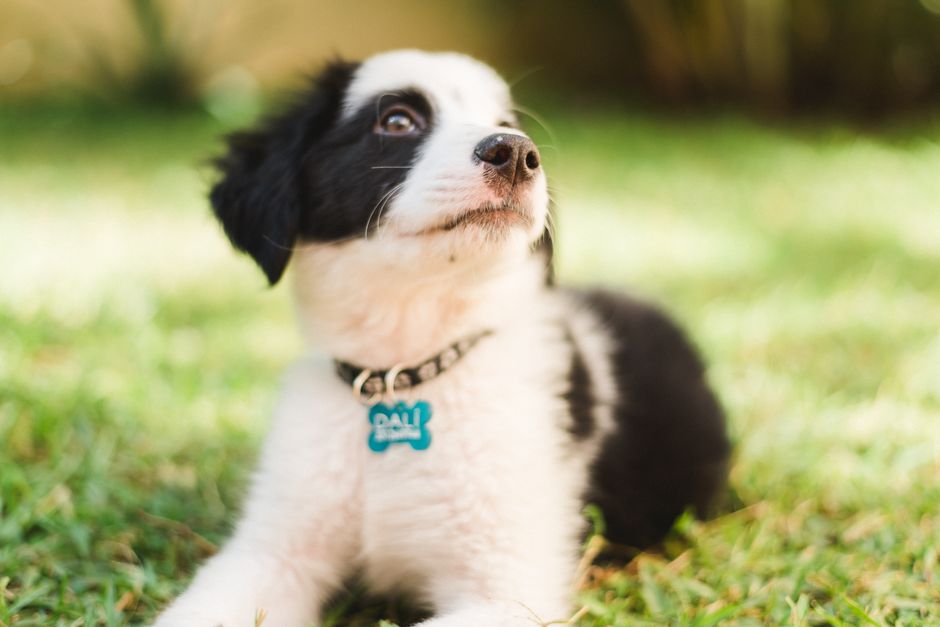
The Ultimate Dog Tag Collar Guide: Safety, Tech & How to Never Lose Your Pup
Discover everything you need to know about choosing the perfect dog tag collar. From materials and legal requirements to smart QR code technology, this guide covers how to keep your furry friend safe and recoverable.
Why Your Dog Tag Collar Matters More Than You Think
Every second counts when your dog slips out of the front door or dashes after a squirrel during a walk. In that moment of panic, the only thing standing between a happy reunion and a frantic search is a tiny piece of metal or plastic dangling from your dog's neck. The humble dog tag collar has been a staple of pet ownership for decades, but its importance cannot be overstated. According to the American Veterinary Medical Association, approximately one in three pets will go missing at some point in their lifetime, and without proper identification, the chances of reunification drop dramatically. This is where the combination of a sturdy collar and a highly visible, readable dog tag becomes non-negotiable.
Many pet owners make the critical mistake of assuming their pet is microchipped and therefore safe. While microchipping is an essential layer of protection, it is passive identification. A microchip only works if a Good Samaritan finds your pet and takes them to a vet or shelter equipped with a scanner. A dog tag collar, however, provides instant, active identification. Anyone who finds your scared pup can immediately read the information on the tag, contact you, or visit a website listed on a QR code. This immediate accessibility drastically reduces the time your pet spends lost and stressed.
The evolution of the dog tag has been remarkable. We have moved far beyond the simple stamped metal plates of the past. Today, a modern dog tag collar can incorporate waterproof materials, reflective elements for night visibility, and even scannable QR codes that link directly to a secure online pet profile. This integration of technology with a physical tool creates a safety net that is both robust and user-friendly. For pet parents who treat their dogs as family members, the choice of collar and tag is not just an aesthetic decision; it is a fundamental safety precaution.
In this comprehensive guide, we will dissect every aspect of the dog tag collar—from the best materials and engraving techniques to the revolutionary benefits of smart tags like Pethna. You will learn why a jangling piece of metal is often not enough, how to avoid common pitfalls like worn-out engravings, and ultimately how to choose a system that guarantees your pet can always find their way home. Whether you are a first-time puppy parent or a seasoned owner of a senior rescue, the information here will change how you view that small but mighty accessory hanging from your pet's collar.
Anatomy of a Perfect Dog Tag Collar: Materials That Last
When selecting a dog tag collar, the material of both the collar itself and the attached tag is paramount. You are looking for durability, comfort, and longevity. The collar must withstand daily wear, exposure to mud, rain, and sunshine, and the occasional rough-and-tumble play session. Nylon webbing collars remain the most popular choice because they are lightweight, dry quickly, and are available in a vast array of colors and patterns. However, for heavy chewers or powerful breeds, a leather or biothane collar often proves superior. Biothane, a vegan leather alternative, is waterproof, odor-resistant, and incredibly strong, making it an excellent foundation for any dog tag collar system.
The tag itself faces an even harsher reality. It constantly rubs against the ground, gets caught on bushes, and is submerged in water bowls and puddles. Traditional stamped aluminum tags are cheap, but they are notoriously soft. Within a year, the stamped letters can become shallow, worn, and completely illegible. Stainless steel is the gold standard for durability in a dog tag collar setup. It is resistant to rust, corrosion, and physical abrasion. A stainless steel tag will outlast the collar itself, maintaining its legibility for the lifetime of your pet. Some high-end tags now use titanium or ceramic coatings for scratch resistance, though these often come at a premium price.
Readability is the entire point of a dog tag, and this is where material intersects with design. Laser engraving on stainless steel produces crisp, deep, dark letters that are easy to read even from a distance. This is vastly superior to embossing or stamping, which raises the metal (often flattening out over time). When evaluating a dog tag collar, look for products that specifically advertise "laser engraved" or "deep etch" technology. Additionally, consider the finish. A matte or brushed finish reduces glare from sunlight, making the information easier to read outdoors. Glossy tags look pretty in the store but can become blinding when the sun hits them just right, rendering the text invisible to a finder.
Finally, do not overlook the connection point. The most durable dog tag collar in the world is useless if the tag falls off. The split ring is the weakest link in the traditional setup. Look for welded, heavy-duty, or D-ring style connectors. Many modern smart tags, like Pethna, integrate the tag directly onto the collar plate or use a proprietary locking clip that prevents accidental detachment. This is a critical feature because losing a tag while on a walk defeats the entire purpose. Invest in a system where the tag is an integral part of the collar, not just an afterthought dangling from a flimsy ring.
What to Engrave on a Dog Tag Collar for Maximum Safety
The information you choose to put on your dog tag collar can mean the difference between a quick phone call and a permanent loss. Space is limited, so every word must count. The absolute non-negotiable piece of data is your phone number. Not just any number—your mobile phone number, specifically the one you actually carry with you. Avoid listing a home landline if you rarely check voicemails. Ideally, include a secondary number, perhaps a spouse's or roommate's, in case you miss the initial call. A simple "If found, call [Name]: [Number]" is the most effective format for a traditional dog tag collar.
Should you put your dog's name on the tag? This is a debated topic. Some animal behaviorists argue that putting a dog's name on the tag can make it easier for a stranger to call the dog, potentially luring them into a car or preventing them from running away. However, the primary argument against is that it can make the dog seem more "friendly" or "approachable" to someone who might have bad intentions. For a standard dog tag collar, listing only "REWARD" alongside your phone number is often safer. It incentivizes the finder to contact you without providing unnecessary details. If you have a nervous or reactive dog, omitting the name is strongly recommended.
The rise of the QR code dog tag collar has completely changed the engraving landscape. With a smart tag like Pethna, you no longer need to cram your address, medical conditions, and multiple phone numbers onto a tiny piece of metal. Instead, you engrave a short, unique URL or have a QR code printed directly on the tag. The finder scans the code with their smartphone camera and is instantly taken to a private, secure profile page. On this page, you can store your full address, multiple phone numbers, your vet's contact info, critical medical alerts (like "Diabetic" or "On daily medication"), and behavioral notes (like "Nervous around children"). This completely eliminates the space constraints of a traditional dog tag collar.
For those who prefer a hybrid approach, consider engraving a single, concise call-to-action. Something like "Scan QR code on back for details" or "Visit Pethna.com/ID" combined with your phone number gives the finder two ways to reach you. This redundancy is powerful. If the QR code is dirty or scratched, the phone number remains visible. If the finder is non-tech-savvy, the QR code is useless, but the engraved number saves the day. When designing your dog tag collar text, always prioritize simplicity and clarity. Use a large, sans-serif font. Avoid cursive scripts or decorative fonts that are difficult to read, especially in low light or for someone who might be in a hurry.
15-day free trial — No commitment
All premium features unlocked. No credit card required. Protect your pet in 2 minutes.
Try free for 15 daysSmart Dog Tag Collars vs. Traditional Tags: The 2026 Verdict
The pet accessory industry has seen a seismic shift towards technology, and the dog tag collar is at the forefront of this revolution. The traditional tag has been a faithful servant for over a century, but it has fundamental flaws that are impossible to ignore. The primary pitfall is information rigidity. If you move house, change your phone number, or adopt a new dog, you have to buy a completely new tag. Statistically, most pet owners forget to update their tags when they move, rendering them useless. A smart dog tag collar solves this problem entirely. With a digital profile, you can update your contact information instantly in the cloud. The tag remains the same; the data changes with you.
Another major advantage of a smart dog tag collar is enhanced functionality. A traditional tag is a static piece of metal. A QR code tag is a dynamic portal. Imagine your dog is lost in a storm. The finder scans the tag and sees not only your mobile number but also a "Notify All Family Members" button that sends an SMS alert to you, your partner, and your dog walker simultaneously. Many smart platforms also offer geo-location logging. When the tag is scanned, the finder's approximate location is recorded and sent to the owner. This feature is a game-changer if the dog is lost far from home and you have no idea which direction they ran.
Cost is often the deciding factor for many budget-conscious pet owners. A basic stamped dog tag collar setup might cost you five to ten dollars at a big-box pet store. A premium smart tag with a lifetime subscription can cost two to three times that amount upfront. However, consider the long-term value. A traditional tag needs to be replaced every time the information changes. If you move twice over the life of your dog, you are buying three separate tags. The engravings wear out, the ring breaks, and the metal corrodes. A smart tag is a one-time hardware purchase. The materials are typically superior (stainless steel, waterproof), and the digital profile lasts forever. Over a 10-15 year pet lifespan, the cost per year of a smart dog tag collar is often lower than the cost of repeatedly replacing cheap metal tags.
The verdict in 2026 is clear: for tech-savvy owners who value reliability and peace of mind, a smart dog tag collar is superior. It is not about replacing the collar itself; it is about upgrading the identification plate. Physical collars are still essential for leash attachment and holding the tag. But the ID component should be digital. The fear that "old people won't scan QR codes" is largely outdated in 2026. Smartphone penetration is nearly universal, and QR code scanning is an innate feature of both iOS and Android camera apps. No app download is required. Smart tags have democratized pet recovery, making it faster, more accurate, and far more reliable than the scratched, stamped tags of yesteryear.
Legal Requirements: What Your Dog Tag Collar Must Include
While the emotional and practical reasons for a dog tag collar are universal, the legal requirements vary significantly by jurisdiction. In many countries, including the United Kingdom, it is a legal requirement for dogs to wear a collar with an identification tag when in a public place. The Control of Dogs Order 1992 mandates that any dog in a public place must wear a collar with the name and address of the owner inscribed on it or on a plate or badge attached to it. The owner's telephone number is not strictly required by law in the UK, but it is highly recommended. Violating this law can result in a fine, so a proper dog tag collar is not just a good idea—it is the law.
In the United States, there are no federal laws regarding dog collars and tags, but virtually every municipality has its own ordinances. Most cities and counties require dogs to wear a current rabies vaccination tag and a valid dog license tag attached to the dog tag collar. These are separate from your personal ID tag. The rabies tag is usually provided by the veterinary clinic and indicates the year the vaccine was administered. The city license tag is proof that the dog is registered with the local animal control authority. Failure to display these tags can lead to citations, impoundment fees, and in some cases, the dog being held at a shelter until proof of vaccination is provided.
This creates a cluttered reality for most dogs. A standard dog tag collar can quickly become a noisy, heavy chain of jangling metal: the personal ID tag, the rabies tag, the city license tag, and perhaps a microchip tag. This is not only annoying for the owner but can also be stressful for the dog. The constant clinking can cause anxiety. Furthermore, multiple tags create multiple points of snagging. A tag can get caught in a crate grate or a fence, potentially choking the dog. The solution is to consolidate. A smart tag like Pethna can replace the personal ID tag entirely, reducing the total number of tags on the collar.
Regardless of where you live, the minimum requirements for a dog tag collar are clear proof of ownership and proof of rabies vaccination. Your personal tag must be legible. If the engraving is worn off, you are breaking the law in many areas. Check your local regulations annually. Some cities have moved to digital licensing where the QR code on a smart tag can serve as proof of license. Always carry a picture of your dog's vaccination records on your phone, even if the tag is present. The smartest approach is to use a dog tag collar that holds a QR code linking to your pet's full medical profile, which can include a digital copy of their rabies certificate, ensuring you are never caught off guard by a legal check.
Attachment & Maintenance: Keeping Your Dog Tag Collar Secure
You have invested in a high-quality dog tag collar and a perfect tag. The job is not done. How you attach the tag and how you maintain the setup directly impacts its longevity and effectiveness. The first rule of attachment is to avoid the classic "split ring" on a "D-ring" setup if you have an active dog. While standard, the constant motion wears down the metal. Instead, look for tags that slide directly onto the collar strap. These "slide-on" tags are virtually impossible to snag and cannot jingle. If you must use a split ring, choose one made of welded steel with no gap. Apply a drop of thread-locking glue (like Loctite) to the ring's opening to prevent it from twisting open over time.
Noise is a significant but often overlooked issue. A dog tag collar that sounds like a wind chime every time your dog moves can be maddening and can also serve as a warning signal during hunting or stalking, preventing quiet behavior. There are several strategies to reduce noise. First, use a silicone tag silencer. These are rubber sleeves that encase the tag and the ring, muffling the sound. Second, use a rivet-on or bolt-on plate that attaches flat against the collar. These eliminate motion entirely. Third, consider a waterproof smart tag. Since it has no moving parts and is typically thinner than a traditional tag, it creates far less noise when it hits the bowl or floor.
Regular maintenance is critical. A dog tag collar is exposed to the elements every single day. Once a month, remove the collar and inspect it thoroughly. Check for frayed nylon edges. Is the stitching coming loose? Is there cracking in the leather? For the tag itself, check the clarity of the engraving. Run your fingernail over the letters. If you can barely feel them, they are wearing down. Clean the tag with soap and water to remove dirt that might obscure the information. For smart tags, ensure the QR code surface is clean and scratch-free. A scratched QR code can still scan, but a dirty one covered in mud might not.
Pay special attention to the snap buckle on the collar. For safety, many owners use breakaway collars for cats, but for dogs, a standard buckle or quick-release clip is standard. Ensure the quick-release snap is not jammed with dirt or hair. Test it monthly. A faulty buckle can lead to the entire dog tag collar falling off in the woods. If you use an electronic fence or a GPS tracker collar, the dog tag is an essential backup. Never rely solely on technology. Even the best GPS collar has a dead battery. The physical dog tag is your failsafe. Therefore, the dog tag collar and tag should be treated as a critical safety device, not a fashion accessory.
Frequently Asked Questions About Dog Tag Collars
1. Should I take my dog's collar off inside the house?
This is a personal safety decision. Many owners remove their dog's dog tag collar inside the house to prevent the tags from getting caught on crates, furniture, or other dogs during play. Choking or strangulation is a real risk, especially if the collar gets hooked on a vent or a cabinet handle. However, the risk of a house fire, an open door, or a visitor accidentally letting the dog out is also real. A good compromise is to remove the collar at night when the dog is crated or sleeping, but keep it on during the day. Ensure the collar is snug but not tight—you should be able to fit two fingers between the collar and the dog's neck.
2. How do I stop the tags from making so much noise?
The best solution is to use a silent dog tag collar system. This involves using a tag that slides directly onto the collar strap rather than dangling. Alternatively, you can purchase silicone tag silencers that wrap around the tag and the ring. For smart tags like Pethna, the slim profile and flush attachment design inherently reduce noise. If you have multiple tags (rabies, license, ID), try to consolidate them into one. Use a single, larger tag that contains all necessary information, or switch to a digital QR tag that replaces the physical information tags.
3. What is the most durable material for a dog tag?
Stainless steel is widely considered the most durable material for a dog tag collar accessory. It is resistant to rust, corrosion, and scratches. Laser engraving on stainless steel produces a deep, permanent mark that will not fade. Aluminum is cheaper but wears down quickly. Brass is durable but tarnishes. For the collar itself, Biothane or heavy nylon webbing offers the best combination of strength, waterproofing, and comfort. Avoid cheap plastic tags or painted tags that chip easily, as they degrade quickly and become unreadable.
4. Can a QR code on a dog tag really help find my lost dog?
Absolutely. A QR code on a dog tag collar is one of the most effective recovery tools available today. When scanned with a standard smartphone camera, the QR code instantly directs the finder to a secure web page containing your contact information and your dog's details. Unlike a traditional tag, the information is not static. You can update your phone number, address, or medical information in real-time from your phone. Services like Pethna also provide notifications the moment the tag is scanned, alerting you that someone has found your pet. This immediate feedback mechanism is a massive advantage over a simple metal plate.
Why Pethna is the Ultimate Dog Tag Collar Solution
You have read the evidence: a standard dog tag collar is a good start, but it is not enough in 2026. The future of pet identification is digital, robust, and waterproof. This is precisely where Pethna excels. Our flagship product is a dog tag collar system designed from the ground up to eliminate the weaknesses of traditional tags. The Pethna tag is crafted from surgical-grade stainless steel. It is 100% waterproof, dustproof, and built to withstand years of rough play, rain, and river swims without corroding or losing legibility. We laser-engrave your pet's unique code directly onto the metal, ensuring it never fades.
The true power of Pethna lies in its smart technology. Our waterproof QR code is permanently bonded to the tag surface. It is scratch-resistant and can be scanned instantly by any smartphone without needing to download an app. When someone finds your dog, they scan the tag. They are immediately taken to your pet's private profile page on Pethna.com. Here you can store unlimited information: multiple phone numbers, detailed medical conditions, emergency contact information, and even a photo of your dog. The best part? You are notified instantly via email and SMS that your tag has been scanned. You know someone has your dog before they even make the phone call.
We understand that a dog tag collar is only as good as its reliability. That is why Pethna offers a lifetime warranty on our hardware. If your tag ever fails to scan, we replace it for free. Our platform includes a "One-Click Alert" system that sends a message to all your emergency contacts simultaneously. We have also integrated a Lost Pet community map, where other Pethna users in your area are alerted to keep an eye out. This turns every Pethna tag wearer into a potential neighborhood safety net. It is a community-driven layer of security that no traditional tag can offer.
Finally, Pethna is designed to be the dog tag collar that grows with your pet. Changing your phone number or moving to a new home? Update your profile in seconds. Adopting a new dog? Register them under the same account. No need to order new tags. The simplicity, combined with the unmatched durability and instant recovery alerts, makes Pethna the definitive choice for responsible pet owners. Do not trust your best friend's safety to a scratched piece of metal that might fall off tomorrow. Upgrade your dog tag collar to Pethna and give yourself the ultimate peace of mind—because your dog deserves a tag that works as hard as you do.
---